

Why Fitness Trackers Overestimate Calorie Burn (And How to Adjust)
Your watch says you burned 600 calories. Research suggests it is often wrong by 20 to 90 percent. Here is why fitness trackers overestimate burn and how to adjust.

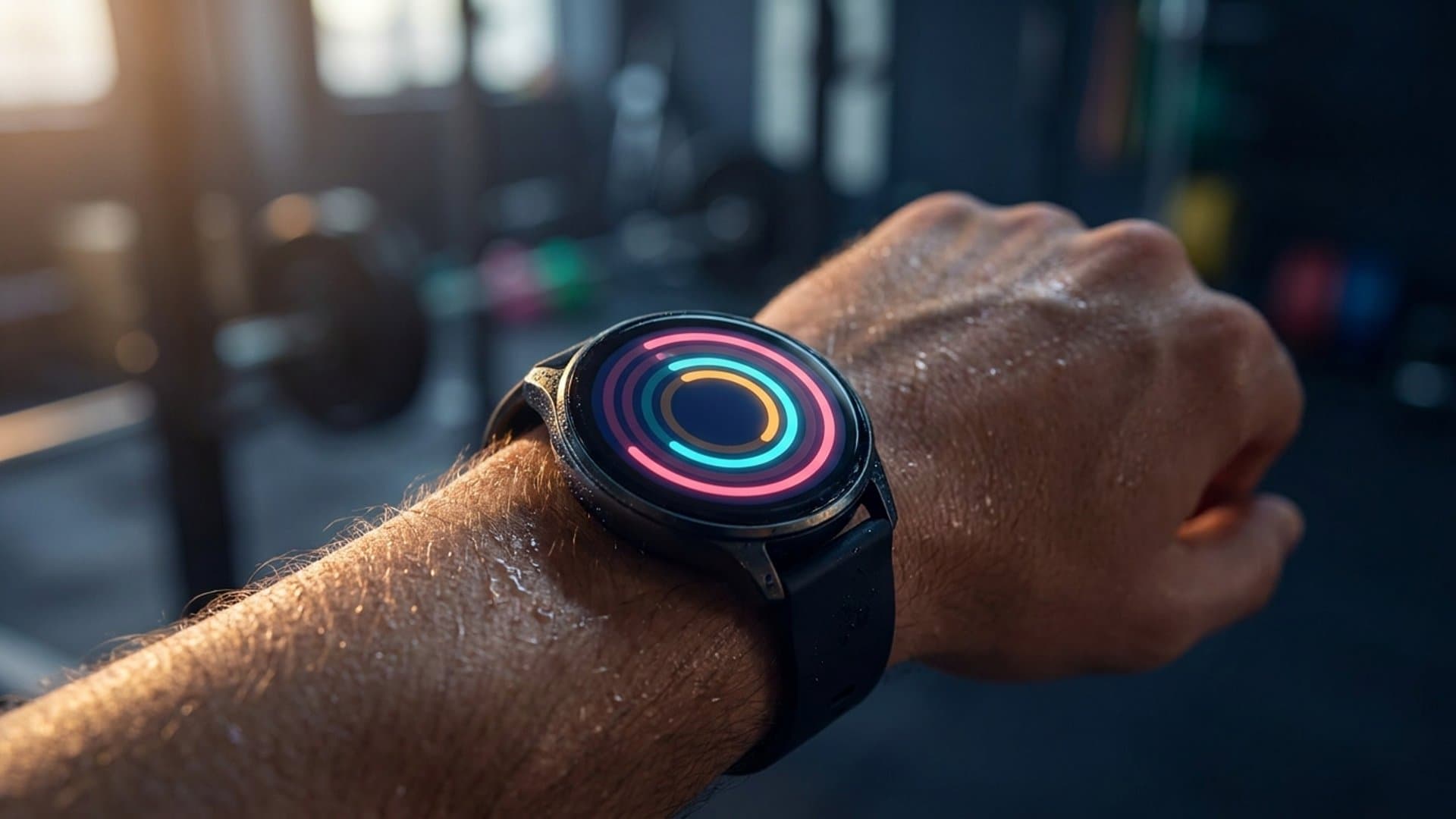
Your watch buzzes after a workout and proudly announces you torched 600 calories. It feels great. It also might be off by a couple hundred calories, and almost always in the direction that hurts your goals. Fitness trackers are remarkably good at some things and remarkably bad at one specific thing: telling you how many calories you actually burned.
If you are tracking food carefully and still not losing weight, an overgenerous calorie-burn estimate is one of the most common hidden culprits. Here is why your tracker gets it wrong and how to adjust so the number stops working against you.
What Trackers Are Actually Good At
Before piling on, credit where it is due. Modern wrist wearables are genuinely accurate at measuring heart rate. A Stanford study published in the Journal of Personalized Medicine tested seven popular wrist devices and found most kept heart-rate error under 5 percent across a range of activities. Step counting is also reasonably reliable on most devices, usually within a small margin during normal walking.
So when your watch tells you your heart rate hit 150 during a run, believe it. When it tells you how much energy that run cost, be skeptical.
Where the Numbers Fall Apart: Calorie Burn
The same Stanford study that praised heart-rate accuracy delivered the bad news on energy expenditure. Even the best-performing device in the test missed the true calorie burn by a median of around 27 percent. The worst device in the group was off by roughly 90 percent. Not one of the seven came close to a level you would want to base your diet on.
| What the tracker measures | Typical accuracy |
|---|---|
| Heart rate | Often within ~5% |
| Step count | Reasonable for walking |
| Calorie / energy burn | Frequently off by 20% or more |
The direction of the error matters as much as the size. The bias varies by device and pace, but for everyday activity and many workouts trackers are frequently inaccurate and often overestimate, telling you that you burned more than you really did. A reading that is 25 percent too high on a workout you believed cost 600 calories means 150 phantom calories you never actually spent.
Calorie burn is the single least reliable number your tracker produces. Treat the heart-rate and step data as solid, and treat the calorie figure as a rough estimate that probably runs high.
Why Calorie Estimates Are So Hard to Get Right
Counting heart beats is a sensor problem. Estimating energy burn is a modeling problem, and the model has to guess at things your watch cannot directly see.
It Cannot Measure Your Body Composition
A tracker knows your weight, age, and sex if you entered them. It does not know your muscle-to-fat ratio, which affects how much energy you actually expend. Two people of identical weight can burn meaningfully different amounts during the same workout.
Heart Rate Is a Loose Proxy for Calories
The watch infers calories largely from heart rate, but heart rate and energy use do not move in lockstep. Caffeine, stress, heat, dehydration, and poor sleep can all push your heart rate up without burning extra calories. The watch sees the elevated heart rate and credits you for work you did not do.
Strength Training Breaks the Model
Heart-rate-based estimates were built around steady cardio. Lifting weights involves short bursts, long rests, and isometric holds that spike heart rate without the sustained oxygen cost the model assumes. This is why trackers are especially unreliable for strength sessions. For a more grounded estimate, our calories burned strength training calculator uses your weight and session length rather than a noisy heart-rate signal.
It Often Double-Counts Your Baseline
Many devices report the total calories burned during an activity, including the calories you would have burned just being alive for that time. If you would have burned 80 calories sitting still for an hour, a one-hour walk credited at 400 calories only added about 320 above baseline. Eating back the full 400 quietly erases part of your deficit.
How This Sabotages Weight Loss
The damage shows up when you "eat back" exercise calories. Say your watch claims a 500-calorie workout, you reward yourself with a 500-calorie snack, but the real burn was closer to 350 once you strip out the overestimate and the baseline you would have burned anyway. You just wiped out your deficit and then some, all while feeling like you earned the treat.
This is exactly the trap we cover in should you eat back exercise calories. The short version: if you eat back exercise calories at all, eat back a fraction, not the full inflated number.
The math that matters is energy in versus energy out over time. If your "out" number is inflated by your watch and you let it drive your eating, the equation tilts back toward maintenance without you realizing it.
How to Adjust: A Practical Playbook
You do not need to throw your tracker away. You need to use it for what it does well and stop trusting the one number it does badly.
- Discount the burn by 20 to 30 percent. If your watch says 500, plan around roughly 350 to 400. This roughly corrects for the typical overestimate.
- Do not eat back most exercise calories. Build your daily deficit from your TDEE and let exercise be a bonus, not a license to eat more.
- Pick an activity-based estimate over a heart-rate one when you can. Our exercise calculators for walking, running, and cycling use established energy costs for the activity, which sidesteps the heart-rate guesswork.
- Trust the scale and the mirror over the watch. Your weight trend across two to three weeks is real data. A daily calorie-burn readout is a model's best guess.
- Lean on non-exercise movement, which trackers cannot inflate. All the walking, fidgeting, and standing you do outside workouts adds up through NEAT, and it is one of the most reliable levers you have.
A Quick Reality Check on Walking
Walking is one of the few activities where a simple, weight-based estimate holds up well: most people burn roughly 80 to 100 calories per mile. If your watch tells you a 30-minute walk burned 250 calories, compare it against that range and the distance you actually covered. When the watch and the math disagree, trust the math. We dig into this in walking for weight loss.
Where the Error Is Worst
Not every reading is equally untrustworthy. The size of the miss depends on what you are doing and how the device estimates burn.
| Activity | How reliable is the calorie estimate? |
|---|---|
| Steady walking or jogging | Better than most, since it matches the cardio model the device assumes |
| Cycling on a bike with a power meter | Reasonable when the device reads actual power output |
| Strength training | Poor, because short bursts and isometric holds break the heart-rate model |
| HIIT and circuit work | Poor, with rapid heart-rate swings the model struggles to translate into energy |
| All-day "active calories" totals | Often inflated once you add up dozens of small misreads |
If you mostly walk and run, your tracker's numbers are closer to reality than if you lift or do circuits. That does not make the walking and running figures exact, but it tells you which readings deserve the heaviest discount.
Calibrate Against the Scale, Not the Watch
The most reliable way to learn how wrong your tracker is for you specifically is to test it against your own weight data. Pick a two to three week window, log your food honestly, and watch the trend.
If you are eating what you believe is a 400-calorie daily deficit but your weight holds steady, the gap is almost certainly hiding in two places: food you underlogged, and exercise calories your watch inflated. Tighten both. Stop eating back the workout burn, weigh your food for a couple of weeks to remove the guesswork, and let the scale tell you whether your real deficit matches the one on paper. This feedback loop matters more than any single number your watch produces, and it is the same approach we recommend for breaking through a stall in should you eat back exercise calories.
The Bottom Line
Fitness trackers are excellent motivators and decent heart-rate monitors. When it comes to calories, though, they are guessing, and they tend to guess high. Use the heart-rate and step data with confidence, discount the calorie burn by a quarter or more, avoid eating back the full number, and judge your progress by your weight trend instead of your watch. Used that way, the watch helps your deficit rather than quietly eating into it.
Frequently Asked Questions
Stop Guessing Your Daily Numbers
Calvin helps you build a deficit you can actually trust

References
- Shcherbina A et al. Accuracy in Wrist-Worn, Sensor-Based Measurements of Heart Rate and Energy Expenditure in a Diverse Cohort. J Pers Med. 2017
- Murakami H et al. Accuracy of Wearable Devices for Estimating Total Energy Expenditure: Comparison With Metabolic Chamber and Doubly Labeled Water Method. JAMA Intern Med. 2016
- Murakami H et al. Accuracy of 12 Wearable Devices for Estimating Physical Activity Energy Expenditure Using a Metabolic Chamber and the Doubly Labeled Water Method: Validation Study. JMIR Mhealth Uhealth. 2019

Founder & Developer
Ryan is the founder and lead developer of Calvin. With a passion for both technology and health optimization, he built Calvin to solve his own frustrations with manual calorie tracking. He believes that AI can make healthy eating effortless.
Related Articles

How to Estimate Calories Burned During Strength Training
Strength training calorie burn is easy to overstate and hard to measure. Use MET values and a simple formula to get an estimate you can actually log.

Walking for Weight Loss: The Underrated Exercise That Actually Works
Walking doesn't get the respect it deserves for weight loss. Here's the research on why it works, how much you need, and how to make it count.
Should You Eat Back Exercise Calories? When It Makes Sense (And When It Doesn't)
Your watch says you burned 400 calories, should you eat them back? Here's when it makes sense, when it doesn't, and why fitness trackers get it wrong.