

Should You Eat Back Exercise Calories? When It Makes Sense (And When It Doesn't)
Your watch says you burned 400 calories, should you eat them back? Here's when it makes sense, when it doesn't, and why fitness trackers get it wrong.

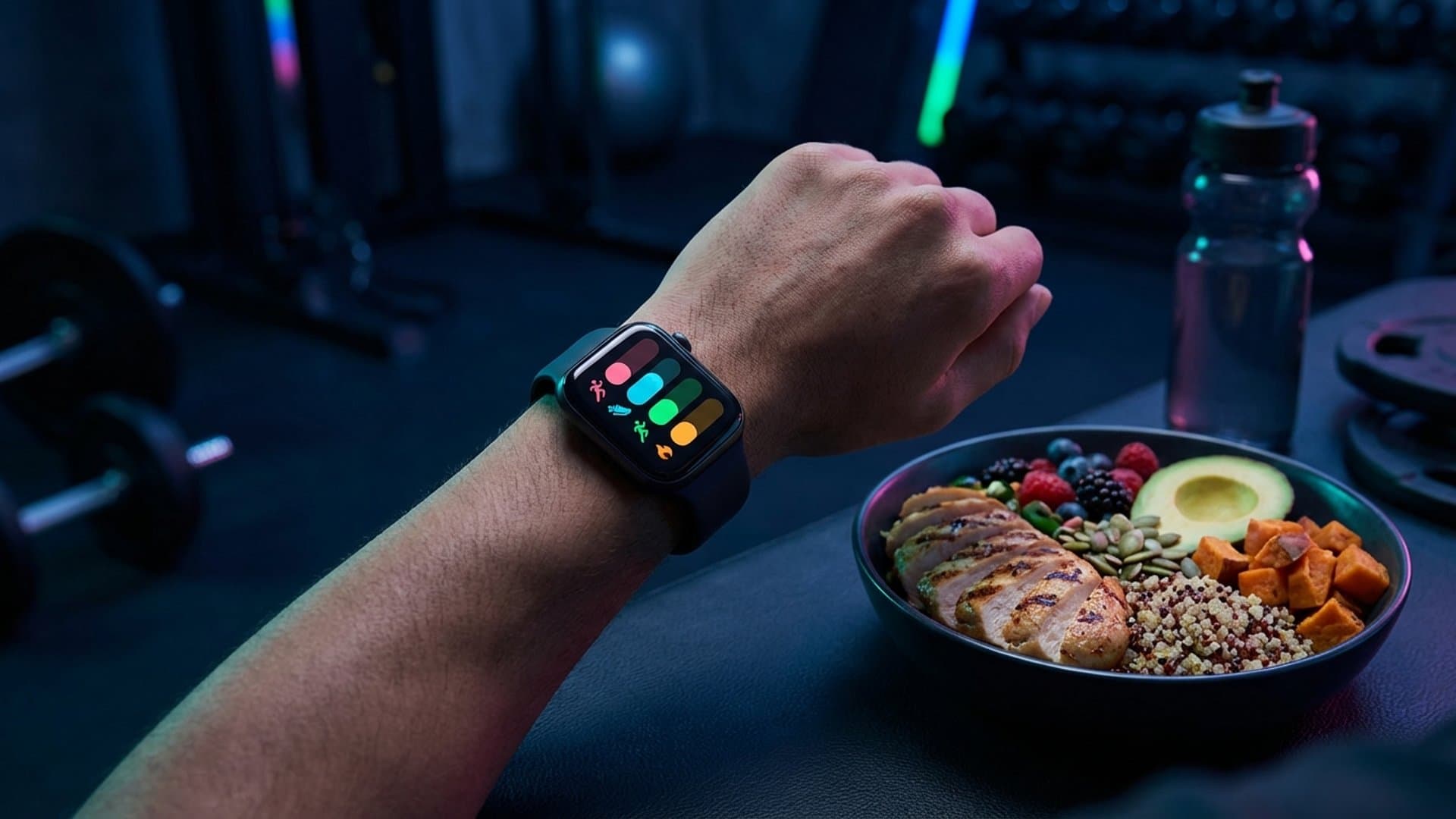
"My watch says I burned 400 calories, should I eat those back?" One of the most common questions I see. The answer depends on a few things, including how much you trust that calorie estimate.
The problem: your tracker is lying
Before deciding whether to eat back exercise calories, you need to understand a critical issue: fitness trackers are not accurate.
A 2017 Stanford study tested seven popular fitness trackers and found calorie burn estimates ranged from 27% to 93% off compared to laboratory measurements. That's not a small margin of error.
| Tracker Type | Typical Accuracy | Error Range |
|---|---|---|
| Wrist-based heart rate | 20-40% | Often overestimates |
| Chest strap | 10-20% | More accurate but still imperfect |
| Gym machine displays | 30-50% | Usually overestimate significantly |
| Online calculators | 15-30% | Depends on inputs |
If your watch says you burned 500 calories, the true number could be anywhere from 250 to 650 calories. Building your eating around inaccurate numbers leads to inaccurate results.

The "double counting" trap
Here's where many people go wrong. They set their TDEE based on activity level, then also add back exercise calories from their tracker.
Example of the problem:
- You calculate TDEE at 2,200 calories using the "lightly active" setting
- This already accounts for some daily activity
- You work out and your watch says you burned 400 calories
- You eat 2,600 calories (2,200 + 400)
- But much of that 400 was already in your TDEE estimate
- Result: you're eating more than you realize
Your TDEE calculation includes an activity multiplier:
| Activity Level | Multiplier | What It Includes |
|---|---|---|
| Sedentary | 1.2 | Desk job, minimal movement |
| Lightly Active | 1.375 | Light exercise 1-3 days/week |
| Moderately Active | 1.55 | Moderate exercise 3-5 days/week |
| Very Active | 1.725 | Hard exercise 6-7 days/week |
| Extremely Active | 1.9 | Physical job + intense training |
If you selected "moderately active," your TDEE already includes calories for moderate exercise. Adding more on top double-counts them.
Set your activity level correctlyWhen NOT to eat back exercise calories
1. You're trying to lose weight
If fat loss is your goal, the built-in inaccuracy of calorie tracking (both food and exercise) suggests caution. Not eating back exercise calories provides a buffer against:
- Tracker overestimation
- Food tracking underestimation
- The margin of error in TDEE calculations
This doesn't mean starving yourself. It means not adding potentially phantom calories.
2. Your exercise is moderate
A 30-minute walk, a light yoga session, or a casual bike ride doesn't burn enough to meaningfully affect your daily energy needs. These activities are likely already captured in your TDEE if you selected an activity level above sedentary.
3. You have a desk job and exercise occasionally
If your job is sedentary and you exercise 3-4 times per week for 30-60 minutes, setting your TDEE to "lightly active" or "moderately active" probably covers your exercise. No need to add more.
4. Your exercise is primarily strength training
Strength training burns fewer calories than most people think. Typically 100-200 calories per session depending on duration and intensity. Trackers are especially bad at estimating resistance exercise, often significantly overreporting.
When TO eat back exercise calories
1. You're training hard and long
Endurance athletes training multiple hours daily burn substantial calories that may exceed standard activity multipliers. If you're running 10+ miles, cycling 50+ miles, or swimming for hours, you need to fuel appropriately.
High-volume athletes need to eat back some calories to:
- Maintain performance
- Support recovery
- Preserve muscle mass
- Avoid relative energy deficiency (RED-S)
2. You're maintaining, not losing
If you're at your goal weight and maintaining, you have more flexibility. Your margin of error matters less because you're not trying to hit a specific deficit.
3. You're showing signs of under-fueling
If you're:
- Constantly fatigued
- Performance is declining
- Having mood issues
- Losing strength
- Experiencing irregular hunger patterns
You may need more fuel. Exercise calories might be the missing piece.
4. Your activity varies dramatically day-to-day
If Monday is a rest day and Saturday is a 4-hour bike ride, a single TDEE number won't capture both days well. Eating back some exercise calories on high-activity days makes sense.
The 50% rule: a practical compromise
If you want to eat back some exercise calories but don't fully trust your tracker, try eating back 50% of estimated exercise calories.
Example:
- Tracker says: 500 calories burned
- Eat back: 250 calories (50%)
- Buffer against: overestimation, food tracking errors
This approach acknowledges you burned extra calories, accounts for tracker inaccuracy, prevents over-eating from inflated numbers, and keeps some of the exercise "bonus" for fat loss.
The 50% rule is a practical compromise between eating everything back (risky for accuracy) and eating nothing back (potentially under-fueling for active people).
The better approach: adjust activity level instead
Rather than adding exercise calories to a base number, build your average exercise into your TDEE calculation from the start.
Steps:
- Honestly assess your typical weekly exercise
- Select the appropriate activity multiplier
- Use that TDEE as your daily target
- Don't add exercise calories on top
This simplifies daily tracking, accounts for exercise in a more consistent way, reduces the impact of tracker inaccuracy, and works better for most people.
Exception: If your activity varies significantly (rest days vs. heavy training days), consider setting separate targets for each type of day.
Calculate the right deficit for your activitySigns you're under-eating for your activity
If you're exercising regularly and not eating back any calories, watch for these warning signs:
| Warning Sign | What It Might Mean |
|---|---|
| Constant fatigue | Energy deficit too large |
| Performance declining | Insufficient fuel for training |
| Excessive hunger | Body signaling need for more food |
| Mood disturbances | Related to energy availability |
| Loss of menstrual cycle | RED-S (serious concern) |
| Frequent illness | Immune suppression from under-fueling |
| Plateaued progress | Metabolic adaptation |
If you're experiencing multiple signs, consider eating back some exercise calories or increasing your base intake.
How different activities compare
Not all exercise burns equal calories, and trackers vary in accuracy by activity type:
| Activity | Calories/Hour (150 lb person) | Tracker Accuracy |
|---|---|---|
| Walking (3 mph) | 200-250 | Moderate |
| Running (6 mph) | 500-600 | Better |
| Cycling (12-14 mph) | 400-500 | Poor (varies by resistance) |
| Swimming | 400-700 | Very poor |
| Weight training | 200-300 | Very poor |
| HIIT | 400-600 | Poor (hard to measure) |
| Yoga | 150-250 | Moderate |
Activities with steady-state cardio (walking, running) are tracked more accurately than variable activities (weight training, HIIT, swimming). You can get more reliable estimates using dedicated calculators for calories burned running or calories burned during HIIT.
Fundamentals of calorie trackingDecision framework
A simple framework for deciding whether to eat back exercise calories:
Don't eat back if:
- Your goal is weight loss
- Your exercise is moderate (under 45 minutes)
- Your TDEE already includes your activity level
- You have a sedentary job with occasional exercise
Eat back 50% if:
- Your exercise is substantial (60+ minutes of cardio)
- You're experiencing mild fatigue
- You want to be conservative but not ignore exercise
Eat back most/all if:
- You're training like an athlete (2+ hours/day)
- You're maintaining weight, not losing
- You're showing signs of under-fueling
- Your doctor or dietitian recommends it
The bottom line
For most people trying to lose weight with moderate exercise, don't eat back exercise calories. Set your TDEE at an appropriate activity level and let that be your daily target.
A few reasons:
- Trackers overestimate calorie burn significantly
- TDEE multipliers already account for activity
- The built-in buffer helps offset food tracking errors
- Most moderate exercise doesn't create enormous calorie needs
For serious athletes training at high volumes, the calculation changes. You need to fuel performance, and exercise calories become meaningful. Consider the 50% rule or work with a sports dietitian.
The question isn't really "should I eat back exercise calories?" It's "have I set my daily targets appropriately for my activity level?"
When to adjust your intakeFrequently Asked Questions
Track What You Eat, Not What You Burn
Calvin focuses on accurate food tracking, the factor you can actually control

References
- Shcherbina A et al. Accuracy in Wrist-Worn, Sensor-Based Measurements of Heart Rate and Energy Expenditure in a Diverse Cohort. J Pers Med. 2017;7(2):3.
- Pontzer H et al. Constrained Total Energy Expenditure and Metabolic Adaptation to Physical Activity in Adult Humans. Curr Biol. 2016;26(3):410-7.
- Melanson EL et al. Resistance to exercise-induced weight loss: compensatory behavioral adaptations. Med Sci Sports Exerc. 2013;45(8):1600-9.

Founder & Developer
Ryan is the founder and lead developer of Calvin. With a passion for both technology and health optimization, he built Calvin to solve his own frustrations with manual calorie tracking. He believes that AI can make healthy eating effortless.
Related Articles

Walking for Weight Loss: The Underrated Exercise That Actually Works
Walking doesn't get the respect it deserves for weight loss. Here's the research on why it works, how much you need, and how to make it count.

Why You Overeat on Weekends (And How to Fix It)
Research shows most people eat more on weekends. Here's why the 'Monday diet' phenomenon happens and practical strategies to stop sabotaging your progress.

Managing Calories With a Desk Job: What Sitting All Day Actually Costs
A desk job takes movement out of your baseline and puts food within arm's reach for eight hours. Here's what that costs, and where the calories leak.