

Can You 'Boost' Your Metabolism? The Truth
Green tea, spicy foods, meal timing, do any metabolism 'boosters' actually work? A science-based look at what really affects your metabolic rate and what's just marketing.

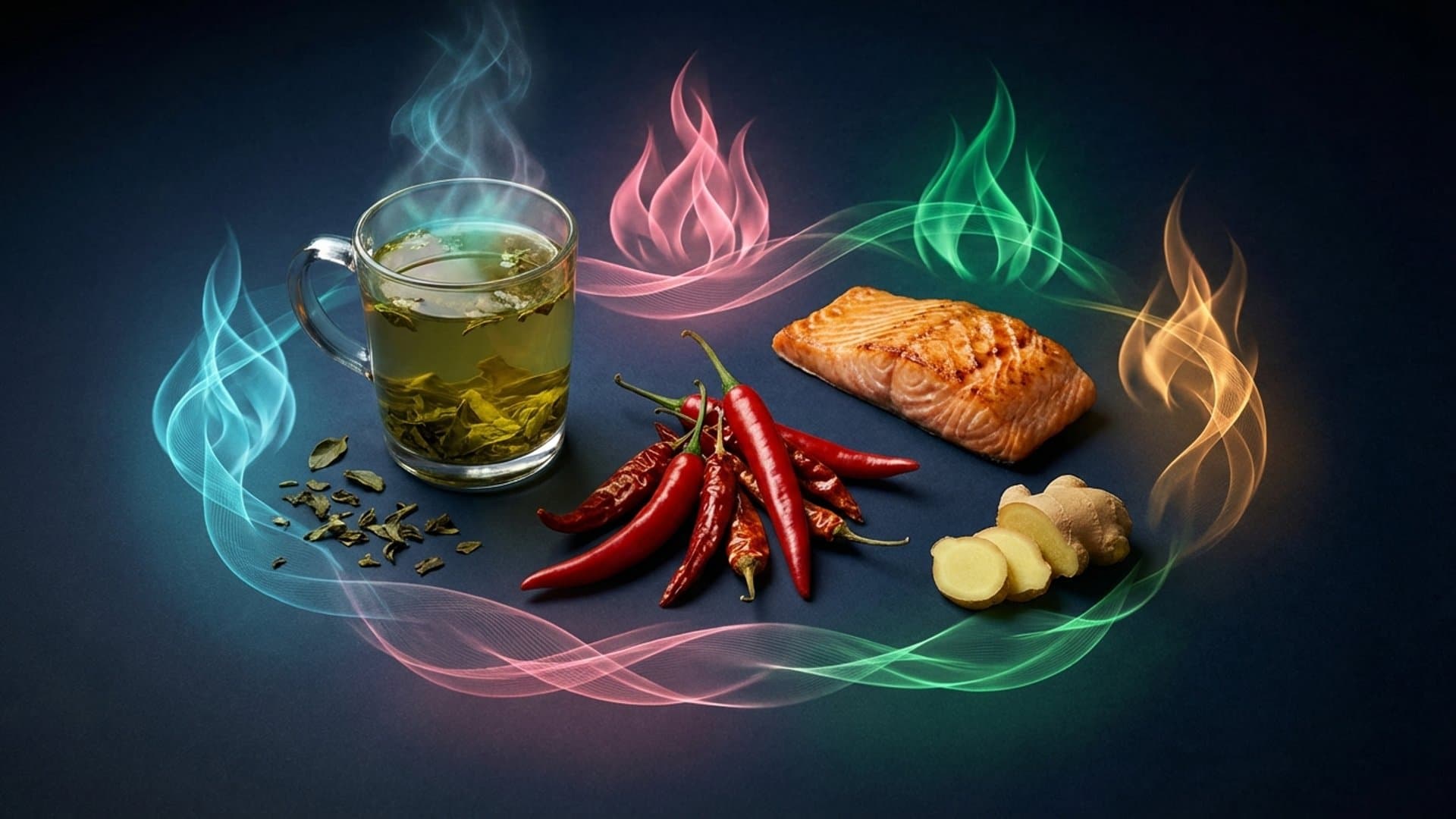
"Boost your metabolism with this one weird trick!"
You've seen the claims. Green tea extract. Apple cider vinegar. Eating six small meals. Spicy foods. Cold showers. The internet is full of metabolism "hacks" promising to turn your body into a calorie-burning machine.
The truth is most of these claims are wildly exaggerated or just made up. Some things do move metabolic rate. Most of the popular ones barely register.
What Is Metabolism, Really?
Your metabolism is the sum of all chemical processes that keep you alive. When people talk about "boosting" metabolism, they usually mean increasing Total Daily Energy Expenditure (TDEE): the total calories you burn per day.
TDEE has four components:
| Component | % of Total | What It Is |
|---|---|---|
| BMR (Basal Metabolic Rate) | 60-75% | Calories burned just existing |
| NEAT (Non-Exercise Activity) | 15-30% | Fidgeting, walking, standing |
| TEF (Thermic Effect of Food) | ~10% | Calories burned digesting food |
| EAT (Exercise Activity) | 5-10% | Intentional exercise |
Your BMR alone accounts for 60-75% of daily calorie burn. This is why most "metabolism boosters" that target other components have minimal real-world impact.
The "Boosters" That Don't Work (Much)
Green Tea and Green Tea Extract
The claim: Catechins and caffeine in green tea increase fat oxidation and metabolic rate.
The reality: Studies show a small effect of around 75-100 extra calories per day with high doses of green tea extract (not just drinking tea). That's about one fewer bite of a cookie.
Verdict: Real but negligible. You'd need to drink 5-8 cups daily for months to see any measurable effect.
Spicy Foods and Capsaicin
The claim: Hot peppers increase metabolism and burn fat.
The reality: Capsaicin temporarily increases metabolic rate by about 50 calories over a few hours. The effect is short-lived, and you'd need to eat uncomfortably spicy food consistently to maintain it.
Verdict: Real but impractical. If you like spicy food, enjoy it. Just don't expect it to change your weight.
Eating Small, Frequent Meals
The claim: Eating 6 small meals "stokes your metabolic fire" and prevents your body from going into "starvation mode."
The reality: The thermic effect of food is proportional to calories consumed, not meal frequency. Whether you eat 2,000 calories in 2 meals or 6 meals, you burn the same amount digesting it. Multiple controlled studies confirm this.
Verdict: Complete myth. Eat whatever meal frequency suits your lifestyle.
Apple Cider Vinegar
The claim: ACV boosts metabolism and helps burn fat.
The reality: No credible research supports this. Any weight loss associated with ACV is likely due to appetite suppression or placebo effect, not metabolic changes.
Verdict: Myth. It's salad dressing, not a metabolic intervention.
Cold Showers and Cold Exposure
The claim: Cold exposure activates brown fat and increases calorie burn.
The reality: Brown fat is real, and cold exposure does activate it. The effect in adults is small, maybe 50-100 extra calories for serious sustained cold exposure. Unless you're swimming in cold water for hours or keeping your house at 60°F, the impact is minimal.
Verdict: Real but impractical. The discomfort isn't worth it for weight loss purposes.
Metabolism-Boosting Supplements
The claims: Thermogenics, fat burners, and metabolic boosters promise to increase calorie burn.
The reality: Most contain caffeine (which does work slightly) plus unproven or ineffective ingredients. Many are poorly regulated and may contain undisclosed substances.
Verdict: Mostly marketing. Caffeine works a little; most other ingredients don't.
What Actually Affects Your Metabolism
Calculate your personal metabolic rateNow for what actually matters:
1. Body Size and Composition
The biggest determinant of metabolic rate is how big you are and what you're made of.
- More weight means higher BMR (it takes more energy to run a larger body)
- More muscle means higher BMR (muscle tissue is more metabolically active than fat)
The numbers:
- Muscle burns about 6 calories per pound per day at rest
- Fat burns about 2 calories per pound per day at rest
- Adding 10 lbs of muscle raises BMR by roughly 60 calories/day
This is why crash dieting backfires. Losing muscle through severe restriction lowers your BMR, making future weight management harder.
2. Physical Activity (Especially NEAT)

Non-Exercise Activity Thermogenesis (NEAT) is the most variable part of TDEE and the one most under your control.
NEAT includes:
- Walking around
- Standing vs. sitting
- Fidgeting
- Taking stairs
- Household tasks
- Playing with kids
Studies show NEAT can vary by up to 2,000 calories per day between individuals. That's a huge spread. Some people unconsciously move a lot. Others don't.
Practical impact: Walking 10,000 steps burns about 300-500 extra calories compared to a sedentary day. That's more than any supplement.
3. Age (But Less Than You Think)
The old belief: Metabolism dramatically slows with age, making weight gain inevitable after 30.
The new research: A 2021 Science study analyzing 6,000+ people found that metabolism remains remarkably stable from age 20 to 60. The slight decline seen in older adults is primarily due to loss of muscle mass and decreased activity, not an inherent metabolic slowdown.
The takeaway: Aging doesn't tank your metabolism. Becoming less active and losing muscle does.
4. Sleep
Poor sleep hits metabolism through several pathways. It raises hunger hormones (ghrelin) and lowers satiety hormones (leptin), reduces insulin sensitivity, kills motivation for physical activity, and makes you worse at deciding what to eat.
Studies show sleep-deprived individuals burn similar calories but eat significantly more, which leads to weight gain.
5. Protein Intake
The thermic effect of protein is much higher than carbs or fat:
- Protein: 20-30% of calories burned during digestion
- Carbohydrates: 5-10% of calories burned during digestion
- Fat: 0-3% of calories burned during digestion
A high-protein diet can raise daily calorie burn by 80-100 calories through TEF alone. Protein is also more satiating, which reduces overall intake.
The Honest Math
Let's put the popular "metabolism boosters" in perspective:
| Intervention | Extra Daily Calories Burned |
|---|---|
| Walking 10,000 steps | 300-500 cal |
| Strength training (building 5 lbs muscle) | ~30 cal |
| High-protein diet | 50-100 cal |
| 3 cups of coffee | 30-50 cal |
| Green tea extract (high dose) | 50-100 cal |
| Spicy food | 20-50 cal |
| Cold shower | 10-30 cal |
| Eating 6 meals vs. 3 | 0 cal |
| Apple cider vinegar | 0 cal |
| Most supplements | 0-30 cal |
The only interventions with meaningful impact involve actually moving more or building muscle.
What to Do Instead
Focus on Muscle
Strength training is the closest thing to a real "metabolism hack." More muscle means a higher resting metabolic rate, better insulin sensitivity, stronger bones, and better body composition.
You don't need to become a bodybuilder. Resistance training 2-3 times per week preserves and builds muscle.
Estimate your body compositionIncrease Daily Movement
NEAT matters more than supplements. Simple changes:
- Stand while working when possible
- Take walking meetings
- Park farther away
- Take stairs
- Walk after meals
- Fidget more (seriously, some studies show fidgeters burn hundreds more calories)
Prioritize Sleep
7-9 hours of quality sleep helps with appetite regulation, energy for activity, food choices, and muscle recovery.
Eat Adequate Protein
Aim for 0.7-1g of protein per pound of body weight. That maximizes TEF, preserves muscle during weight loss, and keeps you fuller longer.
Be Skeptical of Quick Fixes
If a product promises to dramatically boost your metabolism, check for peer-reviewed research (not testimonials), look at effect sizes rather than just statistical significance, and remember that if it worked well, everyone would know.
The Bottom Line
Can you "boost" your metabolism? Technically yes, just not the way the internet suggests.
What works:
- Building muscle through strength training
- Increasing daily movement (especially walking)
- Eating adequate protein
- Getting enough sleep
- Being generally active throughout the day
What doesn't (meaningfully):
- Green tea
- Spicy foods
- Meal frequency manipulation
- Apple cider vinegar
- Most supplements
- Cold exposure (unless extreme)
The fitness industry makes billions selling metabolism "hacks" because people want easy solutions. The actual levers (building muscle and moving more) require effort, not purchases.
No metabolism shortcuts. Just the boring stuff: lift weights, walk more, eat protein, sleep well.
Frequently Asked Questions
Focus on What Works
Calvin helps you track calories and protein, the fundamentals that actually drive results

References

Founder & Developer
Ryan is the founder and lead developer of Calvin. With a passion for both technology and health optimization, he built Calvin to solve his own frustrations with manual calorie tracking. He believes that AI can make healthy eating effortless.
Related Articles

Does Drinking Cold Water Burn Extra Calories?
Does cold water burn calories? Your body does spend energy warming it, but the amount is small and the research is messier than the internet suggests. Here's the real math.
Starvation Mode: Myth vs. Reality (What Research Actually Shows)
Will eating too little make your body 'hold onto fat'? Here's what the Minnesota Starvation Experiment and modern research reveal about metabolic adaptation.

Does Eating Breakfast Boost Your Metabolism? What Research Shows
Will skipping breakfast slow your metabolism and cause weight gain? Here's what controlled studies actually show about breakfast and metabolic rate.