

Does Eating Late at Night Cause Weight Gain? The Science
Separating fact from fiction on late-night eating and weight gain. What the research actually shows about meal timing, metabolism, and your waistline.

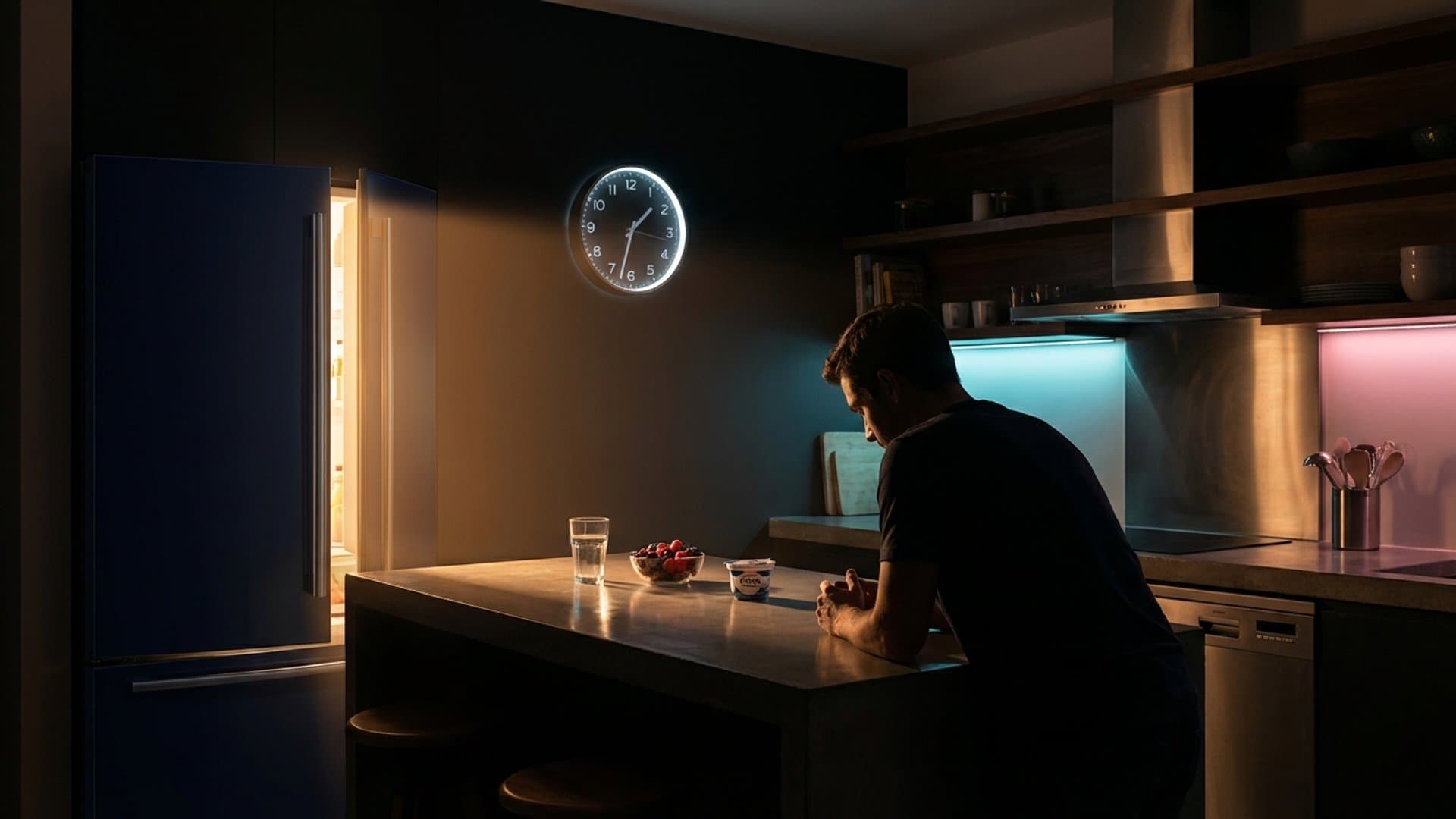
"Don't eat after 8 PM or it turns straight to fat."
You've probably heard some version of this. Maybe from a fitness influencer, a well-meaning relative, or that coworker who's always on a diet. It sounds logical. Your metabolism slows down at night, right?
Here's what the science actually says.
The Short Answer
No, eating late at night does not directly cause weight gain.
Calories don't know what time it is. Your body processes a 500-calorie meal the same way whether you eat it at noon or midnight. The total calories you consume versus burn over time is what determines weight change, not when you eat them.
The basic equation: Weight change = Calories consumed – Calories burned. Time of day is not part of this formula.
There are indirect ways late eating can affect weight, though. That's where the myth gets some traction.
What the Research Shows
Study 1: Shift Workers and Meal Timing
A 2020 study in the International Journal of Obesity followed shift workers who ate most of their calories at night versus during the day. After controlling for total calories, there was no significant difference in weight outcomes.
Key finding: When calorie intake was equal, meal timing didn't matter.
Study 2: Time-restricted eating trials
Multiple studies on intermittent fasting and time-restricted eating show that people who stop eating earlier often lose weight. The catch: they also eat fewer total calories. The timing isn't magic. It's a constraint that reduces intake.
Key finding: Earlier eating windows work by reducing total consumption, not by any metabolic mechanism.
Study 3: Late eating and obesity correlation
Epidemiological studies do find correlations between late eating and obesity. But correlation isn't causation. Late eaters tend to:
- Consume more total calories
- Choose less healthy foods
- Sleep less
- Have less structured eating patterns
Key finding: Late eating correlates with behaviors that cause weight gain, but the timing itself isn't the cause.
Study 4: Controlled feeding studies
In controlled feeding studies where participants are given identical calories at different times, weight outcomes are similar. A 2013 study published in Obesity gave participants the same diet with either a larger breakfast or larger dinner. Both groups lost similar weight, though the breakfast group had better satiety scores.
Key finding: Identical calories, different timing, similar weight loss.
Why the Myth Persists
Reason 1: Your metabolism does slow at night (but not much)
Your metabolic rate dips during sleep, roughly 15% below your resting rate while awake. That's already factored into your Total Daily Energy Expenditure (TDEE). You burn fewer calories while sleeping. You also aren't eating while sleeping. The math works out.
Reason 2: Late-night food choices are often bad
Be honest. What are you eating at 10 PM? Probably not chicken breast and vegetables.
Late-night eating usually means snacking in front of screens, alcohol and bar food, ice cream or chips, and mindless grazing. The problem isn't the clock. It's that late eating tends to be unplanned and calorie-dense.
Reason 3: Sleep and weight are connected
Poor sleep is linked to weight gain. It bumps up ghrelin (hunger), drops leptin (satiety), gives you more waking hours to eat, and tanks decision-making.
Eating late can disrupt sleep, and poor sleep can lead to weight gain. The connection is real, but indirect.
Reason 4: It's an easy rule to follow
"Don't eat after 8 PM" is simple, memorable, and gives people a feeling of control. Simple rules stick better than nuanced advice, even when the nuance is more accurate.
When late eating might be a problem
Timing doesn't cause weight gain on its own, but late eating patterns can drag you in that direction.
1. Untracked snacking
Late-night snacks tend not to get logged. People remember their three meals and forget the bowl of cereal at 11 PM.
2. Emotional eating
Evening is prime time for stress eating, boredom eating, and comfort eating. Those calories add up.
3. Reduced sleep quality
Eating close to bedtime can disrupt sleep, especially with large meals or spicy food. Bad sleep makes weight management harder.
4. It can signal skipped earlier meals
Late eating sometimes reflects an irregular pattern: skip breakfast, light lunch, starve, then overeat in the evening.
The danger of late eating isn't the timing, it's the behaviors that often accompany it. Address the behaviors, not the clock.
The real takeaways
What actually matters
Calculate your daily calorie needs with our TDEE Calculator- Total daily calories. The primary driver of weight change.
- Consistency of tracking. Evening calories are the most frequently skipped in food logs.
- Food quality. Late-night options tend to be less nutritious.
- Sleep quality. Prioritize sleep regardless of meal timing.
- Mindful eating. Are you actually hungry, or just bored?
What doesn't matter (much)
- The specific time you stop eating
- Whether your metabolism "slows down" at night
- Arbitrary cutoffs like 6 PM, 8 PM, or 10 PM
Practical guidelines
If you eat late and want to manage your weight, focus on these.
Strategy 1: Track everything, including late snacks
If you eat it, log it. The 10 PM bowl of cereal counts. The handful of crackers counts. Evening calories are real calories.
Strategy 2: Front-load your calories
Not because of metabolism. Because you're more mindful earlier in the day, you have more structure, and you're less likely to overeat. Eat a substantial breakfast and lunch and you'll naturally be less hungry at night.
Strategy 3: Plan evening eating
If you know you like a bedtime snack, plan for it. Build it into your calorie budget. The problem isn't the snack. It's unplanned eating that pushes you over target.
Strategy 4: Set a "kitchen closed" time
Not because 8 PM is magic. A cutoff just reduces mindless snacking. Pick whatever time fits your lifestyle.
Strategy 5: Address the root cause
If you're overeating at night, ask why. Did you under-eat during the day? Are you bored, stressed, or just not tired? Solve the underlying issue rather than watching the clock.
The bottom line
Eating late doesn't directly cause weight gain. Your body doesn't store food differently based on the time of day. Calories consumed at 9 PM are processed the same way as calories consumed at 9 AM.
Late eating often comes packaged with things that do cause weight gain: unplanned snacking, bad food choices, untracked calories, disrupted sleep.
If cutting off eating at a certain time helps you stay within your calorie target, use it. Just don't stress about the clock itself. Focus on total intake, food quality, and habits you can keep up.
The calories matter. The clock doesn't.
Frequently Asked Questions
Track What Matters
Calvin helps you track total calories, the one thing that actually drives results

References

Founder & Developer
Ryan is the founder and lead developer of Calvin. With a passion for both technology and health optimization, he built Calvin to solve his own frustrations with manual calorie tracking. He believes that AI can make healthy eating effortless.
Related Articles

Does Drinking Cold Water Burn Extra Calories?
Does cold water burn calories? Your body does spend energy warming it, but the amount is small and the research is messier than the internet suggests. Here's the real math.
Starvation Mode: Myth vs. Reality (What Research Actually Shows)
Will eating too little make your body 'hold onto fat'? Here's what the Minnesota Starvation Experiment and modern research reveal about metabolic adaptation.

Does Eating Breakfast Boost Your Metabolism? What Research Shows
Will skipping breakfast slow your metabolism and cause weight gain? Here's what controlled studies actually show about breakfast and metabolic rate.