

How to Track Calories at Restaurants Without Being Weird
Learn practical strategies for estimating and tracking calories when dining out. No food scale required, just smart approaches that don't make you the awkward person at the table.

Restaurant meals are one of the biggest challenges for calorie trackers. You can't see how much oil the kitchen used, portion sizes are huge, and pulling out a food scale at a nice dinner would be... awkward.
Good news: you don't need perfect accuracy. With a few practical strategies, you can estimate restaurant calories well enough to stay on track while still enjoying dining out.
Why restaurant tracking matters
Americans eat an average of 5-6 meals per week outside the home. If you're not accounting for those at all, you're missing a meaningful chunk of your intake. Often the highest-calorie meals of your week.
Studies suggest restaurant meals contain an average of 1,200 calories, about 50-60% of most people's daily needs in a single meal.
Before you go
Check the menu online
Most chain restaurants publish nutrition information on their websites, and many apps and databases include popular restaurant items. A few minutes of research before you go lets you spot the lower-calorie options, plan what you'll order, and pre-log your meal so you don't forget later.
Don't arrive starving
Extreme hunger leads to bigger orders and faster eating. Have a small, protein-rich snack an hour before if you're very hungry.
Have a number in mind
Decide roughly how many calories you want to spend on this meal before you arrive. Having a budget makes the menu choices much easier.
At the restaurant
Step 1: Scan for red flags
Watch for calorie bombs in descriptions:
- "Crispy" or "Fried": adds 200-400+ calories
- "Creamy" or "Alfredo": heavy cream or cheese sauces
- "Loaded": extra toppings and portions
- "Giant" or "Supreme": larger portions
- "Breaded" or "Crusted": extra carbs and fat from coating
Step 2: Estimate the protein
Identify the main protein and estimate the portion:
- Palm-sized portion = about 3-4 oz (100-150 cal for chicken/fish, 200-250 cal for beef)
- Fist-sized portion = about 6-8 oz (double the above)
- Most restaurant proteins are 6-10 oz
Step 3: Account for cooking methods
How it's cooked significantly impacts calories:
| Method | Calorie Impact |
|---|---|
| Grilled, steamed | Base calories |
| Sautéed | +50-100 cal (oil) |
| Pan-fried | +100-200 cal |
| Deep-fried | +200-400 cal |
| Butter-basted | +100-200 cal |
Step 4: Don't forget the sides
Side dishes often contain as many calories as the main course:
- Restaurant mashed potatoes: 200-350 cal
- French fries: 300-500 cal
- Caesar salad: 300-400 cal
- Rice pilaf: 200-300 cal
- Steamed vegetables: 50-100 cal
Step 5: Watch for hidden calories
Easily forgotten additions that add up:
- Bread basket: 150-300 cal
- Butter for bread: 100 cal per tablespoon
- Olive oil for dipping: 120 cal per tablespoon
- Salad dressing: 150-250 cal per serving
- Pre-meal cocktail: 150-300 cal
Ordering strategies
Ask for modifications
Most restaurants will accommodate reasonable requests:
- Sauce on the side
- Grilled instead of fried
- Extra vegetables instead of fries
- Half portion or lunch size
- No butter on the fish
Split or share
Restaurant portions are often 2-3x a normal serving. Split an entrée with someone, order an appetizer as your main, or immediately box half for later.
Choose smart
Some generally lower-calorie options at different cuisines:
American/Steakhouse:
- Grilled fish with vegetables
- Chicken breast (request dry-grilled)
- Side salad with dressing on side
Italian:
- Grilled protein with vegetable sides
- Primavera dishes (watch the oil)
- Soup-based dishes vs cream-based
Mexican:
- Fajitas (skip the tortillas or use one)
- Grilled fish tacos
- Ceviche
Asian:
- Steamed options
- Hot pot or soup-based dishes
- Sashimi
- Avoid "crispy" and heavy sauces
The photo method
The quickest way to track restaurant meals is just taking a photo before you eat. It creates a visual record you can log later, AI apps can estimate calories straight from photos, and it takes 2 seconds. No awkward measuring at the table required.
Snap and Track
Calvin's AI analyzes your food photos to estimate calories instantly

Portion control techniques
The plate method
Visually divide your plate. Half for vegetables, quarter for protein, quarter for starches.
Eat slowly
It takes about 20 minutes for fullness signals to reach your brain. Eating slowly helps you notice you're satisfied before you overshoot.
Leave some behind
You don't have to clean your plate. Restaurant portions are designed for visual appeal and value perception, not nutrition.
Handling social pressure
Logging restaurant meals
Option 1: Find the exact item
Search your tracking app for the restaurant and dish. Many popular chains have their menus in food databases.
Option 2: Use a similar item
If you can't find your exact restaurant, search for the same dish from a similar restaurant or a generic version.
Option 3: Build your estimate
Test your estimation skills with our Calorie Guessing GameBreak down the meal into components:
- Protein type and estimated ounces
- Cooking method adjustments
- Sides and their portions
- Sauces and dressings
- Bread, appetizers, drinks
Option 4: Use a round number
When all else fails, estimate conservatively:
- Light meal (soup, salad): 400-600 cal
- Moderate meal (protein + sides): 700-1,000 cal
- Large/rich meal: 1,000-1,500 cal
- Special occasion meal: 1,500-2,500 cal
The 80/20 rule
You don't need to track every restaurant meal perfectly. Focus your precision on the meals you eat regularly (daily coffee, weekly takeout spot), high-calorie meals that could swing your weekly total, and stretches when you're chasing a specific goal.
For occasional special meals, a rough estimate keeps you aware without obsessing.
Key takeaways
- Research before you go when possible
- Use visual portion estimates at the table
- Watch for hidden calories in cooking methods and extras
- Take a photo for easy AI-assisted logging
- Reasonable estimates beat not tracking
Restaurant meals don't have to derail your progress. With these strategies you can enjoy dining out while staying aware of your intake. No awkward food scale moments required.
Track Anywhere
Calvin makes restaurant tracking easy with AI photo analysis
References

Founder & Developer
Ryan is the founder and lead developer of Calvin. With a passion for both technology and health optimization, he built Calvin to solve his own frustrations with manual calorie tracking. He believes that AI can make healthy eating effortless.
Related Articles
Tracking Fast Food Calories: How to Use the Published Numbers
Fast food is the easiest meal to track accurately, because the numbers are already published. Here's how to read them, where they go wrong, and what to log.
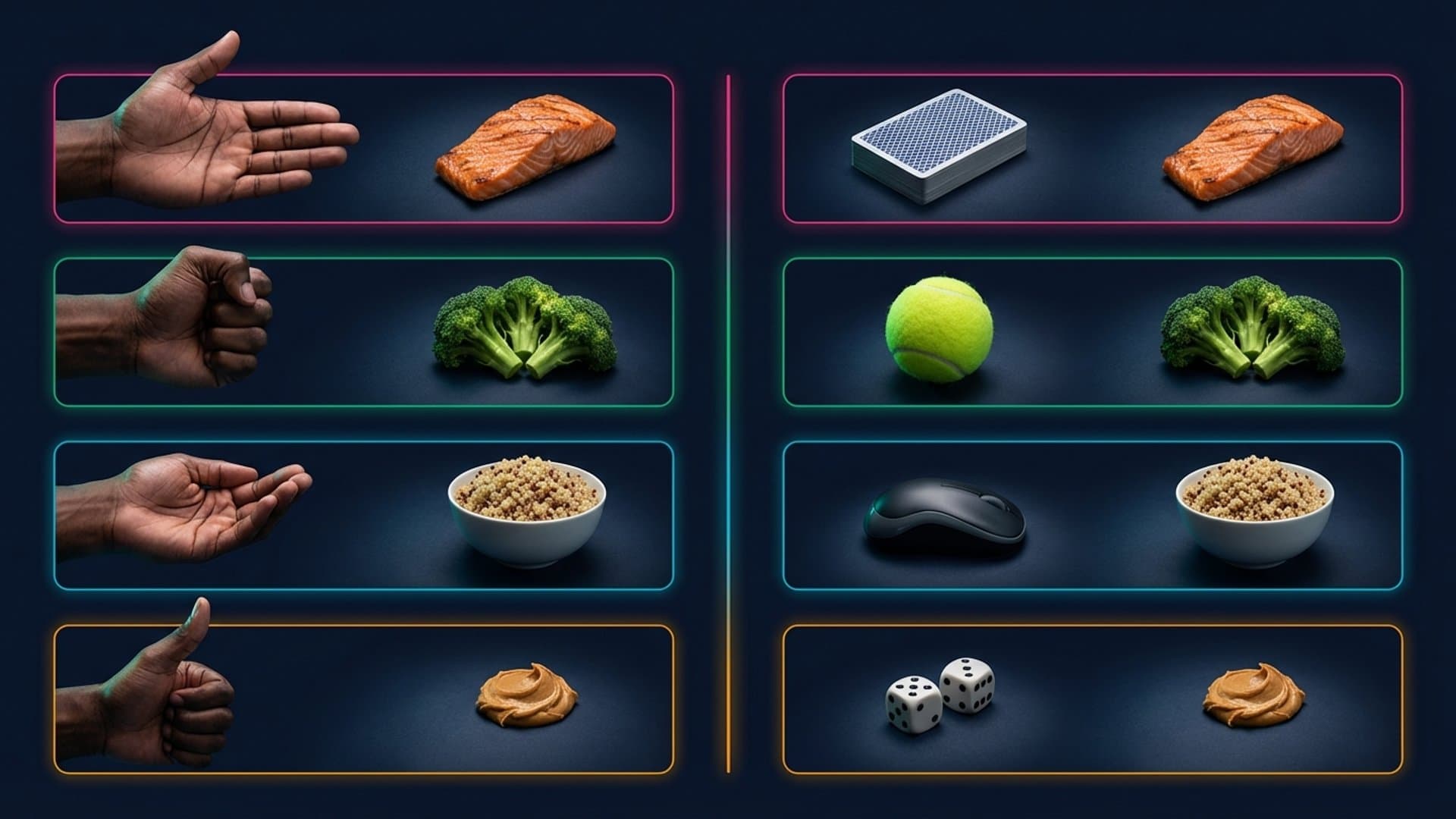
How to Estimate Portions When You Can't Measure
Master visual portion estimation for any situation. From restaurants to buffets to dinner parties, these techniques help you track calories accurately anywhere.
How to Count Calories at a Buffet or Potluck Without Weighing Anything
How to count calories at a buffet or potluck when nothing has a label. What the portion research says, which dishes actually cost you, and how to log the plate afterward.