

High Volume Eating: How to Eat More Food While Cutting Calories
Eat huge portions while staying in a deficit. Learn the science of calorie density and discover 20+ high-volume food swaps to stay full on fewer calories.

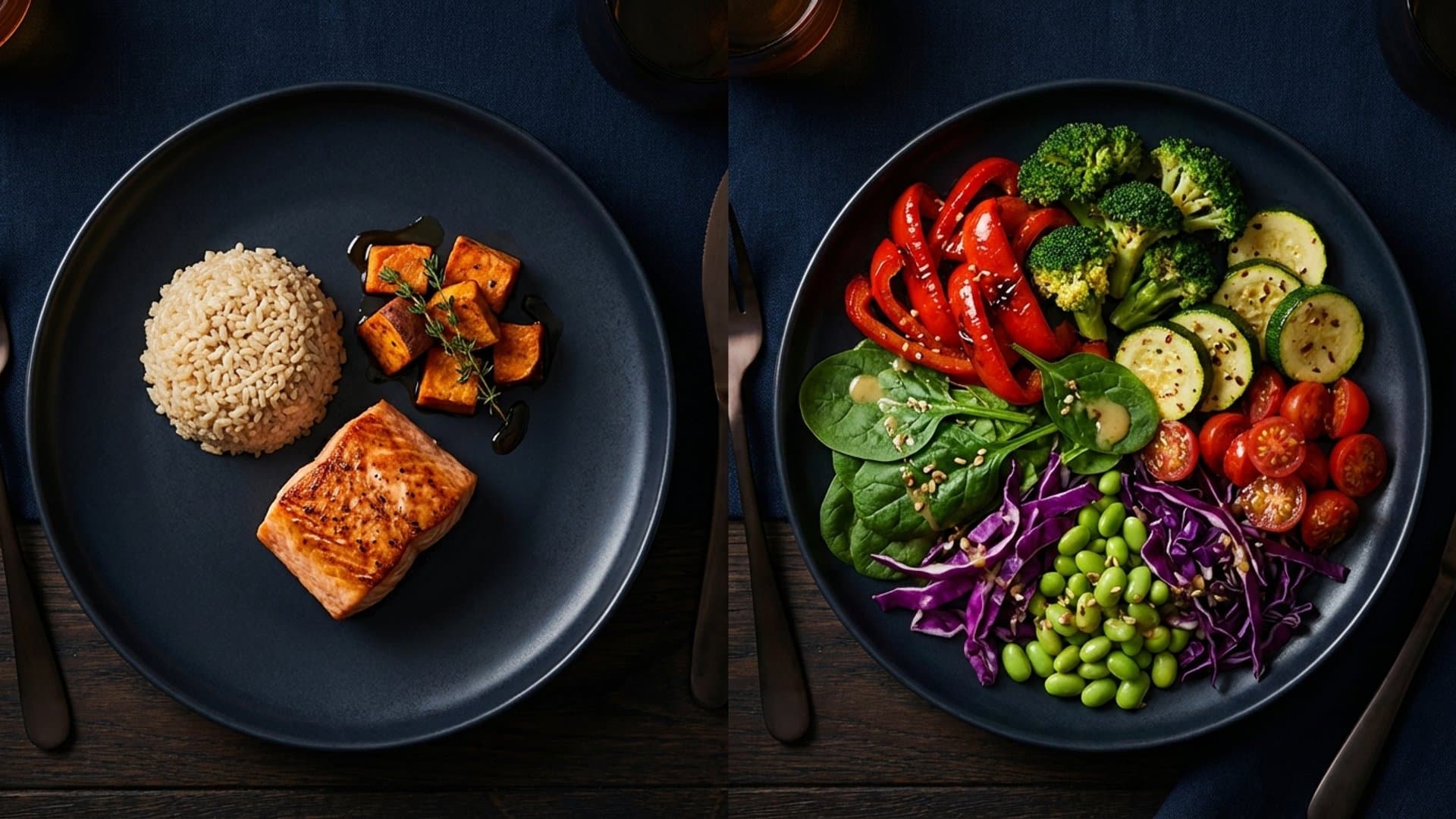
One of the more practical ways to eat in a deficit without feeling constantly hungry is picking foods with low calorie density. Foods where you get a lot of volume for relatively few calories. It isn't complicated, but knowing what to prioritize makes a real difference.
The volumetrics principle
Research by Dr. Barbara Rolls at Penn State landed on a simple finding: your stomach responds to volume, not just calories.
When your stomach stretches, it sends satiety signals to your brain. A pound of food triggers roughly similar fullness whether that pound contains 200 calories or 2,000.
So you can hack satiety by choosing foods with more volume per calorie.
The key metric is energy density: calories per gram of food. Lower energy density = more food for fewer calories = greater fullness per calorie consumed.
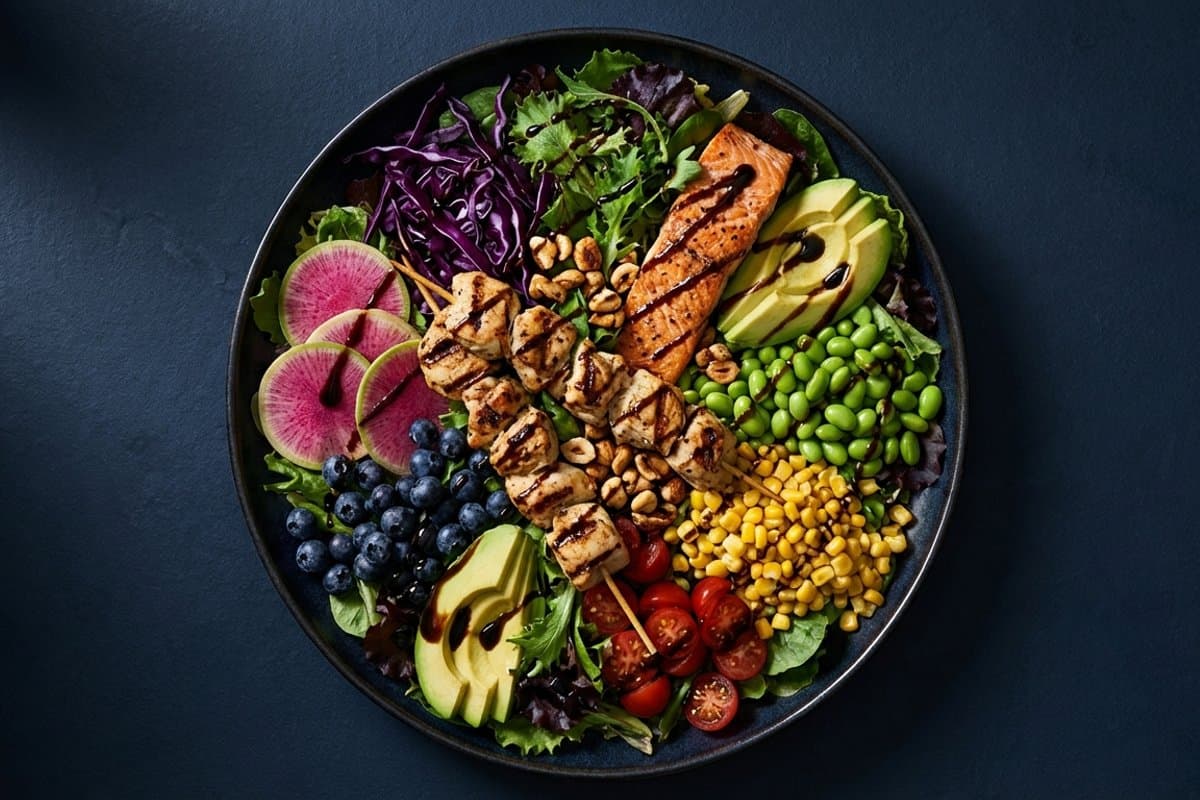
Energy density explained
Energy density is measured in calories per gram:
| Category | Cal/Gram | Examples |
|---|---|---|
| Very Low | under 0.6 | Most vegetables, fruits, broth soups |
| Low | 0.6-1.5 | Legumes, whole grains, lean meat, yogurt |
| Medium | 1.5-4.0 | Bread, cheese, meat with fat, dressings |
| High | >4.0 | Nuts, oils, butter, chips, chocolate |
What determines energy density: water content (water has 0 calories but adds volume), fiber content (fiber adds bulk with minimal calories), and fat content (fat is 9 cal/g vs 4 cal/g for protein and carbs).
The math: same calories, very different portions
Here's what 200 calories looks like across different foods:
| Food | Amount for 200 cal | Volume Visual |
|---|---|---|
| Olive oil | 1.5 tablespoons | Small pour |
| Peanut butter | 2 tablespoons | A few bites |
| Cheddar cheese | 1.5 oz | Small cube |
| Pasta (cooked) | 1 cup | Small bowl |
| Grilled chicken | 5 oz | Medium portion |
| Greek yogurt | 1 cup | Medium container |
| Strawberries | 4 cups | Large bowl |
| Cucumber | 6 cups | Massive pile |
The difference is striking. A small drizzle of olive oil or a giant bowl of cucumbers cost the same in calories. Your stomach will feel very different after each.
The high-volume swap table
Replace calorie-dense foods with high-volume alternatives.
Breakfast swaps
| Instead Of | Try This | Calories Saved |
|---|---|---|
| Granola (1 cup) - 500 cal | Oatmeal (1 cup) + berries - 200 cal | 300 cal |
| Bacon (3 strips) - 150 cal | Turkey bacon (3 strips) - 60 cal | 90 cal |
| Orange juice (8 oz) - 110 cal (see coconut water vs. orange juice) | Whole orange (1 large) - 80 cal | 30 cal |
| Cream cheese (2 tbsp) - 100 cal | Cottage cheese (1/2 cup) - 80 cal | 20 cal + more protein |
Lunch swaps
| Instead Of | Try This | Calories Saved |
|---|---|---|
| Caesar salad dressing (2 tbsp) - 160 cal | Balsamic vinegar (2 tbsp) - 30 cal | 130 cal |
| White rice (1 cup) - 200 cal (see rice vs. potato) | Cauliflower rice (2 cups) - 50 cal | 150 cal |
| Potato chips (1 oz) - 150 cal | Air-popped popcorn (3 cups) - 90 cal (see nachos vs. popcorn) | 60 cal |
| Sandwich with mayo (2 tbsp) - 190 cal | Sandwich with mustard (2 tbsp) - 20 cal | 170 cal |
Dinner swaps
| Instead Of | Try This | Calories Saved |
|---|---|---|
| Pasta (2 cups) - 400 cal | Zucchini noodles (2 cups) + pasta (1/2 cup) - 150 cal | 250 cal |
| Mashed potatoes (1 cup) - 210 cal | Mashed cauliflower (1 cup) - 50 cal | 160 cal |
| Ribeye steak (8 oz) - 550 cal | Sirloin steak (8 oz) - 350 cal | 200 cal |
| Beef taco (2) - 400 cal | Chicken taco bowl - 350 cal | 50 cal + more volume |
Snack swaps
| Instead Of | Try This | Calories Saved |
|---|---|---|
| Trail mix (1/4 cup) - 150 cal | Sugar snap peas (2 cups) - 80 cal | 70 cal |
| Ice cream (1/2 cup) - 270 cal | Frozen Greek yogurt bark - 100 cal | 170 cal |
| Cheese crackers (1 oz) - 150 cal | Celery + hummus (2 tbsp) - 80 cal | 70 cal |
| Chocolate bar - 230 cal | Dark chocolate chips (1 tbsp) + strawberries (1 cup) - 100 cal | 130 cal |
Building a high-volume plate
Use this template for satisfying, low-calorie meals.
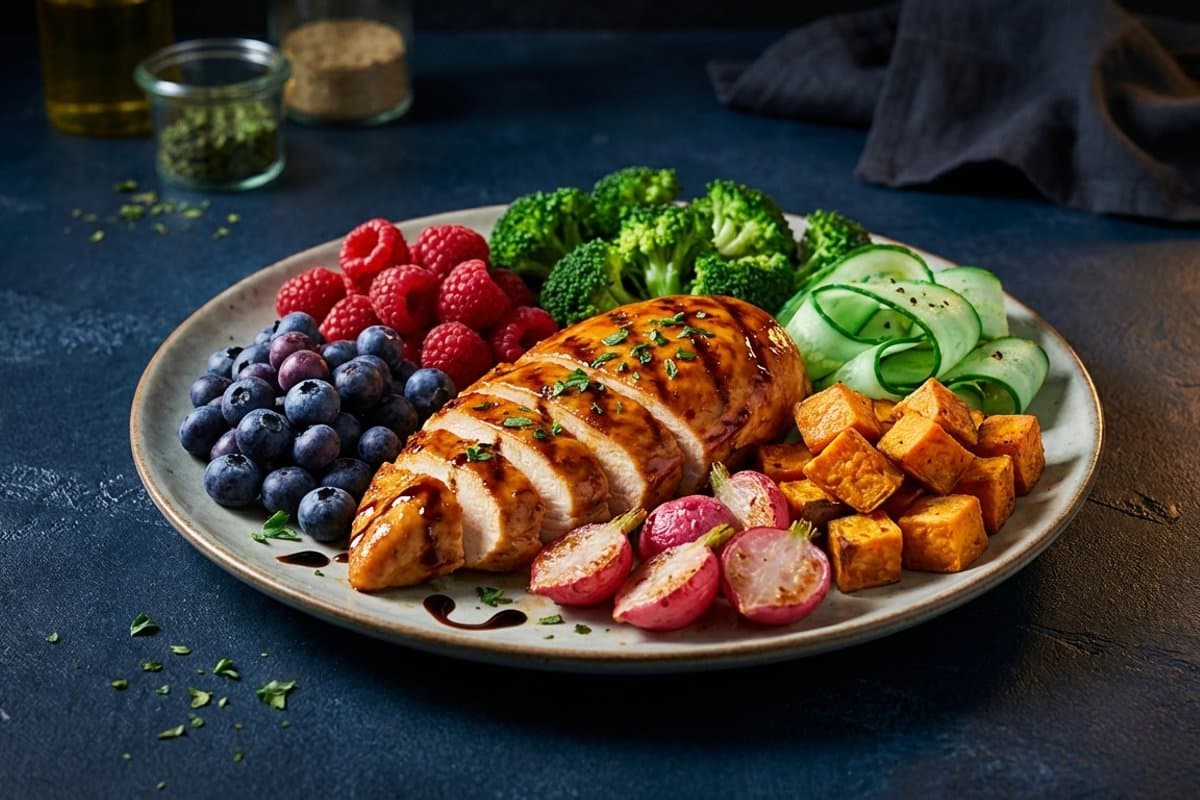
The formula
| Component | Portion | Calories |
|---|---|---|
| Non-starchy vegetables | Half the plate | 50-100 cal |
| Lean protein | Quarter of plate (4-6 oz) | 150-250 cal |
| Complex carbs | Quarter of plate | 100-150 cal |
| Healthy fat | Small addition | 50-100 cal |
| Total | Full plate | 350-600 cal |
Example meals
High-Volume Dinner #1: 450 calories
- Grilled chicken breast (5 oz) - 165 cal
- Roasted broccoli (2 cups) - 60 cal
- Roasted Brussels sprouts (1 cup) - 55 cal
- Baked sweet potato (medium) - 100 cal
- Olive oil for roasting (1 tsp) - 40 cal
- Side salad with lemon juice - 30 cal
High-Volume Dinner #2: 425 calories
- Baked cod (6 oz) - 140 cal
- Zucchini noodles (2 cups) - 40 cal
- Marinara sauce (1/2 cup) - 70 cal
- Roasted asparagus (1 cup) - 40 cal
- Side salad (3 cups greens) - 25 cal
- Balsamic vinaigrette (1 tbsp) - 45 cal
- Cherry tomatoes (1/2 cup) - 15 cal
- Parmesan (1 tbsp) - 50 cal
Best high-volume foods by category
Browse our complete food calorie database →Vegetables (the MVPs)
| Food | Cal/Cup | Volume Rating |
|---|---|---|
| Cucumber | 16 | ★★★★★ |
| Celery | 14 | ★★★★★ |
| Lettuce | 5 | ★★★★★ |
| Spinach | 7 | ★★★★★ |
| Zucchini | 21 | ★★★★★ |
| Tomatoes | 32 | ★★★★☆ |
| Broccoli | 30 | ★★★★☆ |
| Cauliflower | 27 | ★★★★☆ |
| Bell peppers | 30 | ★★★★☆ |
| Mushrooms | 15 | ★★★★★ |
Fruits
| Food | Cal/Cup | Volume Rating |
|---|---|---|
| Watermelon | 46 | ★★★★★ |
| Strawberries | 49 | ★★★★★ |
| Cantaloupe | 53 | ★★★★☆ |
| Grapefruit | 74 | ★★★★☆ |
| Raspberries | 64 | ★★★★☆ |
| Blueberries | 85 | ★★★☆☆ |
| Apple | 95 (1 medium) | ★★★☆☆ |
Proteins
| Food | Cal/4oz | Volume Rating |
|---|---|---|
| Egg whites | 60 | ★★★★☆ |
| Shrimp | 90 | ★★★★☆ |
| Cod/Tilapia | 90-100 | ★★★★☆ |
| Chicken breast | 130 | ★★★☆☆ |
| Greek yogurt (0%) | 100/cup | ★★★★☆ |
| Cottage cheese (1%) | 80/half cup | ★★★★☆ |
Carbs
| Food | Cal/Cup Cooked | Volume Rating |
|---|---|---|
| Cauliflower rice | 25 | ★★★★★ |
| Spaghetti squash | 42 | ★★★★★ |
| Zucchini noodles | 20 | ★★★★★ |
| Shirataki noodles | 20 | ★★★★★ |
| Popcorn (air-popped) | 30 | ★★★★☆ |
| Oatmeal | 150 | ★★★☆☆ |
| Potato | 160 | ★★★☆☆ |
Sample day of high-volume eating: 1,800 calories
Here's what a full day looks like when you prioritize volume.
Breakfast (400 cal)
- Egg white omelette (4 whites) with spinach (2 cups) and mushrooms (1 cup) - 120 cal
- Whole wheat toast (1 slice) - 80 cal
- Avocado (1/4) - 80 cal
- Strawberries (1 cup) - 50 cal
- Coffee with splash of milk - 20 cal
- Orange (1 medium) - 50 cal
Lunch (500 cal)
- Giant salad: mixed greens (4 cups), cucumber (1 cup), tomatoes (1/2 cup), bell peppers (1/2 cup) - 60 cal
- Grilled chicken breast (6 oz) - 200 cal
- Chickpeas (1/4 cup) - 60 cal
- Feta cheese (1 oz) - 75 cal
- Olive oil (1 tsp) + lemon juice dressing - 50 cal
- Apple (1 medium) - 55 cal
Dinner (550 cal)
- Salmon fillet (5 oz) - 250 cal
- Roasted asparagus (2 cups) - 55 cal
- Cauliflower mash (1.5 cups) - 75 cal
- Large side salad with balsamic - 50 cal
- Roasted cherry tomatoes (1 cup) - 30 cal
- Steamed broccoli (1 cup) - 30 cal
- Olive oil for cooking (1 tsp) - 40 cal
- Raspberries (1/2 cup) - 30 cal
Snacks (350 cal)
- Greek yogurt (1 cup) with berries - 150 cal
- Air-popped popcorn (4 cups) - 120 cal
- Baby carrots (1 cup) with hummus (2 tbsp) - 80 cal
Total: 1,800 calories of massive food volume
This day is pounds of food. Large meals that fill your stomach at every sitting. And it's only 1,800 calories. Compare that to a typical American diet, where 1,800 calories might be a single fast-food meal.
Common mistakes with high-volume eating
Mistake 1: Forgetting protein
Vegetables are great for volume but low in protein. Make sure every meal has a real protein source, or you'll be hungry again soon despite eating a lot of food.
Mistake 2: Adding hidden calories
Cooking oils, dressings, cheese, and nuts can quickly stack hundreds of calories onto otherwise low-calorie meals. Watch what you're adding.
Mistake 3: Cutting fat entirely
Some fat is needed for nutrient absorption and satiety. Don't eliminate it. Just be intentional about amounts.
Mistake 4: Eating only vegetables
All-vegetable meals leave you unsatisfied because they're short on protein and often short on calories. Balance volume with actual nutrition.
Track your high-volume mealsThe bottom line
High-volume eating is one of the more sustainable ways to manage calories. Instead of eating tiny portions and feeling deprived, you fill your plate with foods that give you maximum volume for minimal calories.
Key principles:
- Prioritize water-rich, fiber-rich foods
- Fill half your plate with non-starchy vegetables
- Pick lean proteins over fatty cuts
- Watch added fats, oils, and dressings
- Use volume swaps to cut calories without cutting food quantity
The goal is to eat until satisfied while staying in a deficit. High-volume eating makes that possible.
Practice portion estimationFrequently Asked Questions
Track Volume, Not Just Calories
Calvin makes it easy to build satisfying meals that fit your goals

References

Founder & Developer
Ryan is the founder and lead developer of Calvin. With a passion for both technology and health optimization, he built Calvin to solve his own frustrations with manual calorie tracking. He believes that AI can make healthy eating effortless.
Related Articles
What Is a Calorie Deficit and How Big Should Yours Be?
A calorie deficit is required for fat loss, but how big should it be? Learn the science, the math, and how to set the right deficit for your goals and lifestyle.
Should You Eat Back Exercise Calories? When It Makes Sense (And When It Doesn't)
Your watch says you burned 400 calories, should you eat them back? Here's when it makes sense, when it doesn't, and why fitness trackers get it wrong.
Why You Overeat on Weekends (And How to Fix It)
Research shows most people eat more on weekends. Here's why the 'Monday diet' phenomenon happens and practical strategies to stop sabotaging your progress.