

The Thermic Effect of Food Explained: How Your Body Burns Calories Digesting
Your body burns calories just digesting food, but protein, carbs, and fat are processed differently. Here's what TEF means for your diet and metabolism.

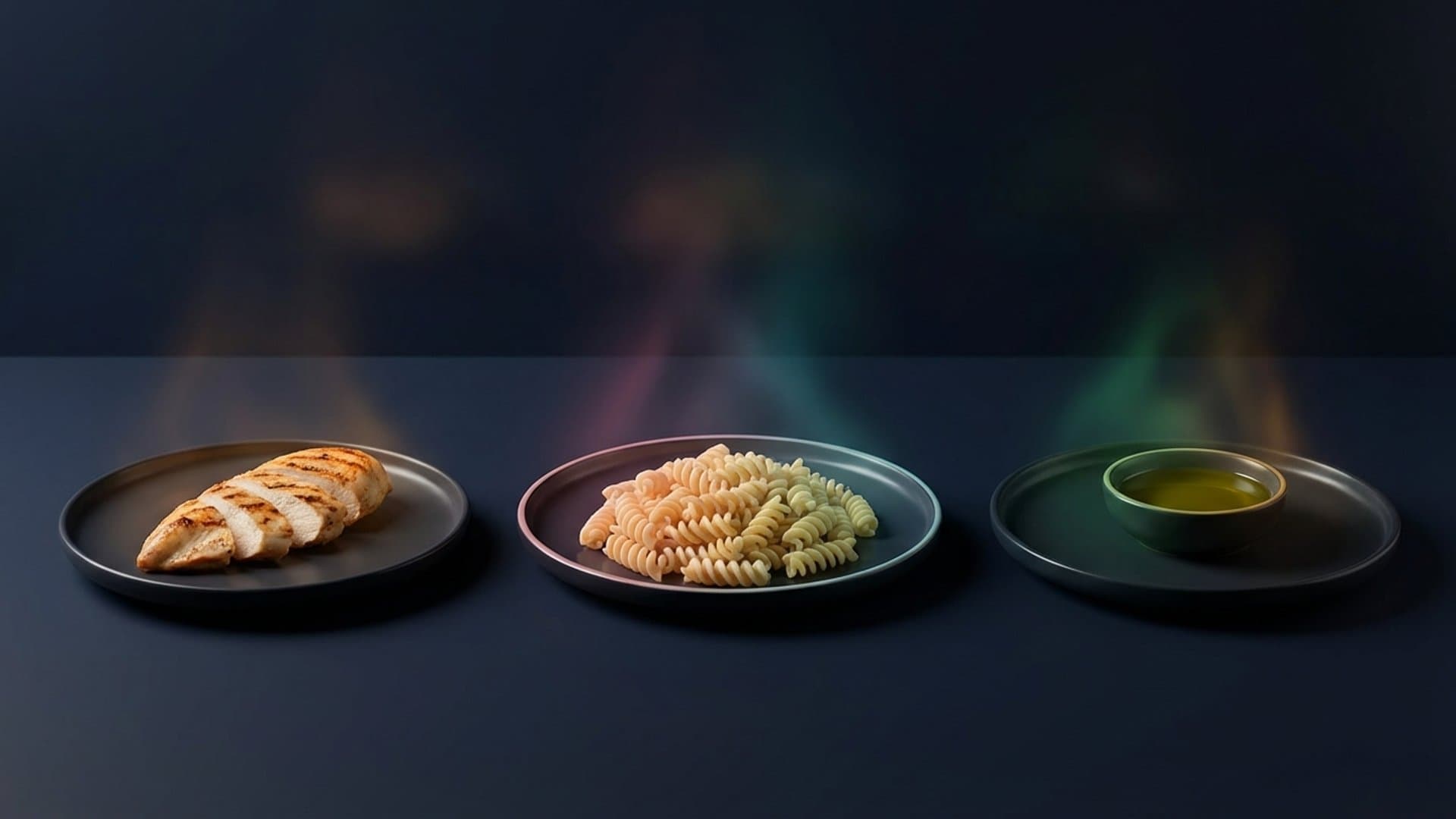
Your body doesn't absorb 100% of the calories you eat. Some energy gets burned during digestion itself. This is the thermic effect of food (TEF), and it varies significantly depending on what you eat. TEF helps explain why some diets work better than others.
What Is the Thermic Effect of Food?
TEF is the energy your body spends to digest and process the nutrients in your food. Think of it as a tax on the calories you consume. Some portion is burned in the process of making those calories available.
TEF typically accounts for about 10% of total daily energy expenditure (TDEE), making it the smallest of the four components:
| Component | % of TDEE | What It Is |
|---|---|---|
| BMR (Basal Metabolic Rate) | 60-75% | Calories burned at rest |
| NEAT (Non-Exercise Activity) | 15-30% | Daily movement, fidgeting |
| TEF (Thermic Effect of Food) | ~10% | Calories burned digesting |
| EAT (Exercise Activity) | 5-10% | Intentional exercise |
While 10% may seem small, it's not insignificant. For someone eating 2,000 calories daily, about 200 calories are burned through digestion. And this percentage can be manipulated based on food choices.
See how TEF fits into your TDEEThe Macronutrient Breakdown
The most important thing to understand about TEF is that it varies dramatically by macronutrient:
| Macronutrient | TEF Range | What This Means |
|---|---|---|
| Protein | 20-30% | You burn 20-30 calories for every 100 calories of protein eaten |
| Carbohydrates | 5-10% | You burn 5-10 calories for every 100 calories of carbs eaten |
| Fat | 0-3% | You burn 0-3 calories for every 100 calories of fat eaten |
| Alcohol | ~15% | You burn about 15 calories for every 100 calories of alcohol |
Protein has 5-10x the thermic effect of fat. That's one reason high-protein diets tend to work well for weight management. You burn more calories just processing the food.
Why Protein Has the Highest TEF
Protein requires the most energy to digest for several reasons. Proteins must be broken down into amino acids before absorption, which takes multiple enzymatic steps. Protein is also the only macronutrient containing nitrogen, and processing and excreting nitrogen as urea costs energy. Some protein gets converted to glucose through gluconeogenesis, an energy-expensive process. And dietary amino acids used to build new proteins in your body require ATP.
The Net Effect
Eating 200 grams of protein (800 calories) might result in:
- TEF: 160-240 calories burned during processing
- Net calories available: 560-640 calories
Compare this to 200 grams of fat (1,800 calories):
- TEF: 0-54 calories burned during processing
- Net calories available: 1,746-1,800 calories
A Real-World Example
Let's compare two 2,000-calorie days with different macro compositions:
Day 1: High Protein
| Macro | Grams | Calories | TEF Rate | Calories Burned |
|---|---|---|---|---|
| Protein | 200g | 800 | 25% | 200 |
| Carbs | 200g | 800 | 8% | 64 |
| Fat | 44g | 400 | 2% | 8 |
| Total | 2,000 | 272 cal |
Day 2: Lower Protein
| Macro | Grams | Calories | TEF Rate | Calories Burned |
|---|---|---|---|---|
| Protein | 75g | 300 | 25% | 75 |
| Carbs | 300g | 1,200 | 8% | 96 |
| Fat | 56g | 500 | 2% | 10 |
| Total | 2,000 | 181 cal |
Difference: 91 calories/day just from TEF
Over a month, that's about 2,700 calories. Roughly a day's worth of food, or about 3/4 of a pound of fat.
TEF differences alone won't cause dramatic weight loss, but combined with protein's other benefits (satiety, muscle preservation), they make a real contribution to weight management.
Does Food Processing Affect TEF?
Yes. The degree of food processing affects how much energy your body expends digesting it.
Whole Foods vs. Processed Foods
A 2010 study compared the TEF of a "whole food" meal (multi-grain bread with cheddar cheese) versus a "processed" meal (white bread with processed cheese product). Both meals had identical calories and macros.
Results:
- Whole food meal: ~20% higher TEF
- Processed food meal: ~20% lower TEF
Why this happens:
- Whole foods require more mechanical breakdown (chewing)
- Fiber in whole foods slows absorption and requires more processing
- Processing essentially "pre-digests" food, reducing the work your body must do
Practical Implications
| Food Type | TEF Impact |
|---|---|
| Raw vegetables | Higher |
| Cooked vegetables | Moderate |
| Whole grains | Higher |
| Refined grains | Lower |
| Intact protein (chicken breast) | Higher |
| Processed protein (protein shake) | Lower |
This doesn't mean protein shakes are "bad." They're convenient and effective. But whole food sources may have a slight TEF advantage.
How TEF Fits Into Weight Management
What TEF Can Do
- Provide a modest metabolic boost (~100-200 cal/day with optimal choices)
- Make high-protein diets more effective for weight loss
- Explain why whole foods tend to produce better results than processed equivalents
- Add up over time (3,000+ extra calories burned per month)
What TEF Can't Do
- Compensate for a calorie surplus (eating too much is eating too much)
- Create "negative calorie" foods (even high-TEF foods provide net positive calories)
- Replace the importance of total calorie intake
- Dramatically change your metabolic rate
Practical Application: Maximizing TEF
1. Prioritize Protein
Aim for 0.7-1g of protein per pound of body weight. This maximizes TEF while also supporting muscle retention and satiety.
Plan your macro split2. Choose Whole Foods When Possible
Opt for less processed versions of foods:
- Whole fruit over fruit juice
- Steel-cut oats over instant oatmeal
- Whole grain bread over white bread
- Chicken breast over deli meat
3. Don't Obsess Over It
TEF is real but modest. Focus on the bigger variables:
- Total calories (most important)
- Protein intake (second most important)
- Food quality/processing (contributes to TEF and satiety)
4. Spread Protein Throughout the Day
Some research suggests TEF may be slightly higher when protein is distributed across meals rather than consumed in one large bolus. Aim for 20-40g of protein at each meal.
Common Questions About TEF
Does Meal Frequency Affect TEF?
No. Whether you eat 2,000 calories in 2 meals or 6 meals, the total TEF is the same. The "eat small frequent meals to stoke your metabolism" advice is based on a misunderstanding of TEF. What matters is total intake and macronutrient composition, not frequency.
Does TEF Decrease When Dieting?
Slightly. When you eat less, you have less food to digest, so absolute TEF decreases. This is one component of metabolic adaptation during weight loss. However, keeping protein high maintains a higher relative TEF.
Can I Calculate My Personal TEF?
Roughly. Use this formula as an estimate:
TEF = (Protein cal × 0.25) + (Carb cal × 0.075) + (Fat cal × 0.02)
For example, eating 150g protein, 200g carbs, 70g fat:
- Protein TEF: 600 × 0.25 = 150 cal
- Carb TEF: 800 × 0.075 = 60 cal
- Fat TEF: 630 × 0.02 = 13 cal
- Total TEF: ~223 calories
The Bottom Line
The thermic effect of food is a real metabolic factor that burns calories during digestion. Key takeaways:
- Protein has the highest TEF (20-30%), followed by carbs (5-10%), then fat (0-3%)
- Whole foods have higher TEF than processed equivalents
- High-protein diets burn more calories through TEF alone
- TEF is about 10% of TDEE: meaningful but not magical
- Meal frequency doesn't affect TEF: total composition does
A diet high in protein and whole foods will naturally maximize TEF. This won't transform your metabolism, but it's one of several small advantages that compound over time.
Eat more protein. Choose whole foods when practical. Let TEF work quietly in your favor.
Understanding calorie fundamentalsFrequently Asked Questions
Optimize Your Macros
Calvin makes it easy to track protein and maximize your nutrition

References

Founder & Developer
Ryan is the founder and lead developer of Calvin. With a passion for both technology and health optimization, he built Calvin to solve his own frustrations with manual calorie tracking. He believes that AI can make healthy eating effortless.
Related Articles

Does Eating Breakfast Boost Your Metabolism? What Research Shows
Will skipping breakfast slow your metabolism and cause weight gain? Here's what controlled studies actually show about breakfast and metabolic rate.

Do Negative Calorie Foods Exist? The Truth About Celery and Other Claims
Do celery, cucumbers, and other foods burn more calories to digest than they contain? Here's the math on 'negative calorie' foods and what actually happens.

Can You 'Boost' Your Metabolism? The Truth
Green tea, spicy foods, meal timing, do any metabolism 'boosters' actually work? A science-based look at what really affects your metabolic rate and what's just marketing.