

Macro Tracking for Beginners: Protein, Carbs, and Fats Made Simple
A simple, no-nonsense guide to macro tracking for beginners. Learn what protein, carbs, and fats actually do, how to set targets, and how to log them without losing your mind.

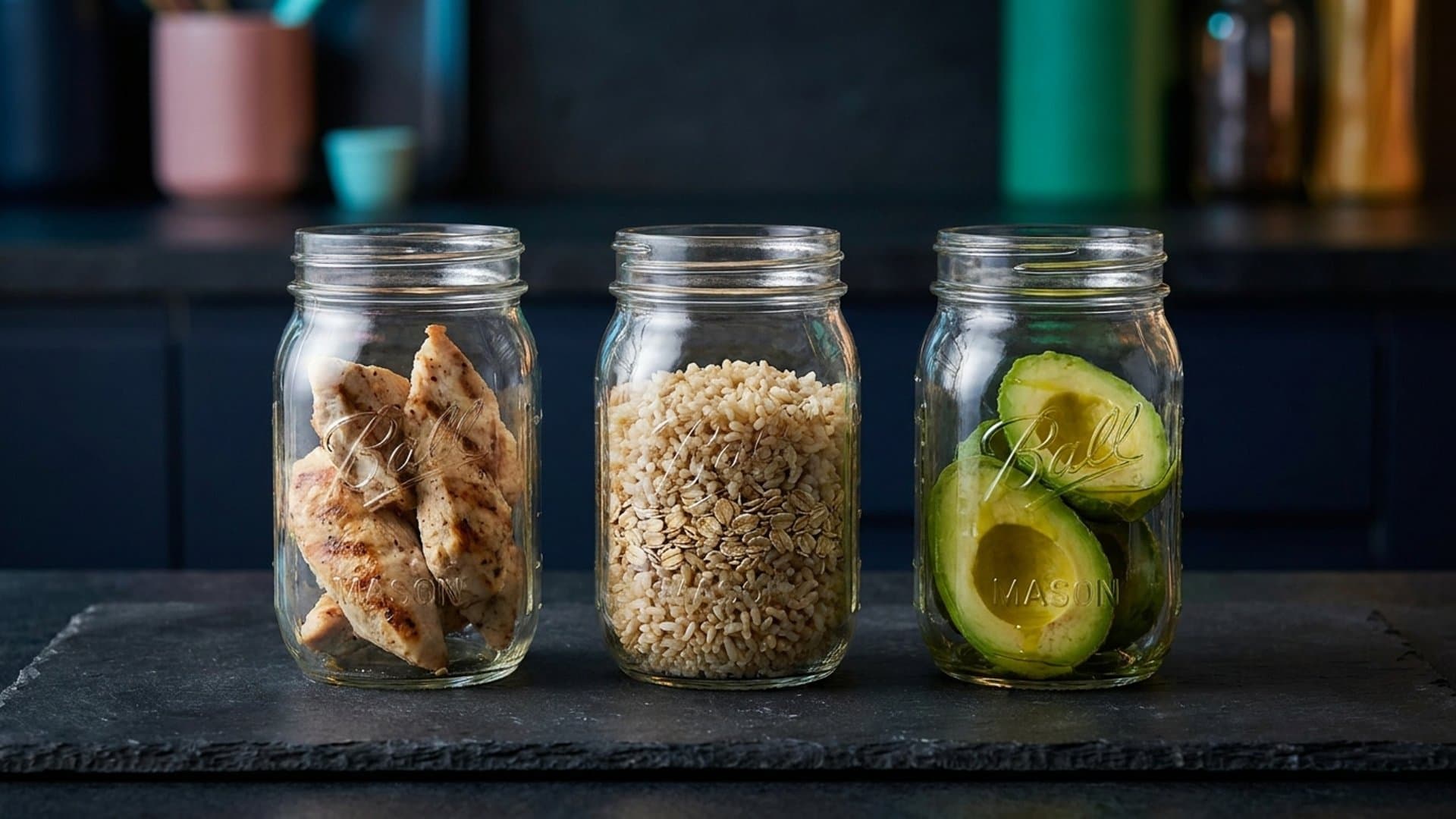
Most people who start tracking calories eventually hit the same wall. The number on the scale isn't moving the way they expected, or it is moving but they feel terrible. The fix is almost always the same: start paying attention to what the calories are made of, not just how many there are. That's macro tracking, and it's simpler than it looks.
What macros actually are
"Macros" is short for macronutrients. The three categories of food that provide the energy your body runs on:
| Macro | Calories per gram | What it does |
|---|---|---|
| Protein | 4 | Builds and preserves muscle, keeps you full, supports immune function |
| Carbohydrates | 4 | Primary fuel for the brain and high-intensity work |
| Fat | 9 | Hormone production, vitamin absorption, long-burning energy |
Alcohol is technically a fourth at 7 calories per gram, but it isn't a true macronutrient. Your body has no use for it beyond burning it off.
Every food on Earth is some combination of these three (plus water and fiber). When you "track macros," you're just splitting your calorie total into three buckets so you can see what your body is actually getting.
Why tracking macros beats tracking calories alone
Calories tell you the quantity of energy. Macros tell you the quality. Two diets at the same calorie level can produce wildly different results:
| Diet A (1,800 cal) | Diet B (1,800 cal) |
|---|---|
| 60g protein | 150g protein |
| 280g carbs | 180g carbs |
| 50g fat | 60g fat |
Diet A will leave you hungrier, more likely to lose muscle, and more likely to regain fat after the diet ends. Diet B preserves muscle, controls appetite better, and produces a more favorable body composition change.
The total calories matter most. But if you've been tracking calories for a while and aren't getting the results you want, macros are usually the missing piece.
How big should your calorie deficit be?Protein: the one that matters most
If you only track one macro, track protein. It's the single most leveraged variable in body composition.
What protein does
- Preserves muscle during a calorie deficit. Without enough, you lose muscle along with fat.
- Boosts satiety. Protein is the most filling macro per calorie.
- Has the highest thermic effect of food. Your body burns 20-30% of protein calories just digesting it, vs. 5-10% for carbs and 0-3% for fats (Calcagno et al. 2019).
How much you need
The research-backed range for active adults is 0.7 to 1.0 grams per pound of body weight per day. Roughly equivalent to the 1.6–2.4 g/kg shown to preserve lean mass during a deficit, and consistent with the ISSN's 1.4–2.0 g/kg recommendation for exercising adults. Higher end if you're cutting or strength training, lower end if you're sedentary.
| Body weight | Protein target (1g/lb) | Calories from protein |
|---|---|---|
| 130 lb | 130g | 520 |
| 160 lb | 160g | 640 |
| 200 lb | 200g | 800 |
| 240 lb | 240g | 960 |
Most people significantly underestimate protein. A "high protein" meal at a restaurant often contains 25-35g. About a third of what an active 150 lb person needs in a day.
Carbs: your default fuel
Carbs are the most misunderstood macro. They aren't required for survival. Your body can make glucose from protein and fat. But they make life much easier, especially if you exercise.
What carbs do
- Fuel high-intensity exercise (lifting, sprinting, sports)
- Spare protein from being burned for energy
- Replenish muscle and liver glycogen
- Support thyroid and reproductive hormones
Two categories that matter
| Type | Examples | When to lean in |
|---|---|---|
| Complex / fibrous | Oats, sweet potatoes, beans, brown rice, vegetables | Most of the day |
| Simple / fast-digesting | White rice, fruit, white bread, sports drinks | Around training |
The real distinction isn't "good carbs" vs "bad carbs". It's fiber content and how processed the food is. A whole apple and a cup of apple juice have similar sugar; the fiber in the apple is what makes it different. The same trap applies to drinks that sound healthy (see coconut water vs orange juice).
How much
After protein and fat are set, carbs get the leftover calories. For most people that's 40-50% of total calories. Roughly 2-3 grams per pound of body weight if you're active.
Foods that fill you up for fewer caloriesFats: less than you think, more than you fear
Fat is calorie-dense (9 cal/gram, more than double the others), so it's easy to overshoot. Cutting it too low causes its own problems.
What fat does
- Produces hormones, including testosterone and estrogen
- Allows absorption of fat-soluble vitamins (A, D, E, K)
- Provides long-lasting energy
- Makes food taste good and feel satisfying
How much
A commonly cited floor for hormonal health is around 0.3-0.4g per pound of body weight (or roughly 20% of total calories, per the Helms et al. 2014 review). Going much lower for extended periods can affect mood, sleep, and reproductive function.
| Body weight | Fat minimum | Fat target (cutting) | Fat target (general) |
|---|---|---|---|
| 130 lb | 40g | 50-60g | 60-75g |
| 160 lb | 50g | 60-75g | 70-90g |
| 200 lb | 65g | 75-95g | 90-110g |
Don't fear dietary fat. Fear excess calories. Olive oil, avocado, nuts, chia seeds, fatty fish, and eggs are some of the most nutrient-dense foods you can eat.
Setting your first macro targets
A no-frills starting framework. Use it for two weeks, then adjust.
Step 1: Find your calorie target
Use a calculator and subtract a deficit if you're cutting (typically 300-500 calories below maintenance for steady fat loss).
Calculate your TDEEStep 2: Set protein
Body weight (lb) × 0.8 to 1.0 = grams of protein per day
Example: 170 lb × 0.9 = 153g protein → 612 calories
Step 3: Set fat
Body weight (lb) × 0.4 = grams of fat per day
Example: 170 lb × 0.4 = 68g fat → 612 calories
Step 4: Carbs get the rest
(Total calorie target − protein calories − fat calories) ÷ 4 = grams of carbs
Example: (2,000 − 612 − 612) ÷ 4 = 194g carbs
Final targets (170 lb cutting at 2,000 cal)
| Macro | Grams | Calories | % of total |
|---|---|---|---|
| Protein | 153 | 612 | 30% |
| Fat | 68 | 612 | 31% |
| Carbs | 194 | 776 | 39% |
That's a perfectly reasonable starting split for almost anyone. Don't agonize over the exact percentages. Get protein right, get fat above the minimum, and the carbs sort themselves out.
How to actually track without going insane
The mistake most beginners make is trying to hit all three macros perfectly from day one. Don't. Stage it.
Week 1: Just track protein
Log everything you eat, but only watch the protein number. Aim to hit your target. Learn what 30g of protein looks like in different foods.
Week 2: Add calories
Now keep hitting protein but also stay under your calorie target. The two together get you most of the result.
Week 3+: Fine-tune fat and carbs
Once protein and calories are automatic, start steering fat into its range. Carbs naturally fall into place once the other three are dialed in.
The complete guide to calorie countingA "close enough" rule
You don't need to hit your macros to the gram. If you're within these ranges, you're winning:
| Macro | Acceptable range |
|---|---|
| Protein | Hit target ± 10g |
| Fat | Within 15g of target |
| Carbs | Whatever's left |
| Calories | ± 100 of target |
Perfectionism is the #1 reason people quit tracking. "Good enough, every day" beats "perfect three days a week."
Common beginner mistakes
1. Going all-in on day one
Tracking every meal, every condiment, and every macro from breakfast Monday is the fastest way to burn out. Start with protein only.
2. Forgetting cooking oils
A tablespoon of olive oil is 120 calories of pure fat. People miss this constantly when eating at home.
3. Eyeballing protein portions
Cooked chicken breast looks small. A 6 oz serving is about the size of two decks of cards, not your whole plate. Weigh it the first few times.
4. Treating "macro-friendly" as a free pass
Protein bars, low-carb wraps, and "high-protein" snacks still have calories. They're tools, not magic.
Foods you're probably underestimating5. Ignoring fiber
Fiber doesn't get its own bucket in most macro splits, but aiming for 25-35g per day dramatically improves satiety and digestion. Most people get half that.
When you don't need to track macros
Macro tracking isn't right for everyone. Skip it (or pause it) if:
- You have a history of disordered eating
- You're at a healthy weight and not training for anything specific
- The mental load is hurting your relationship with food more than it's helping your body
For most people, tracking calories plus a protein floor captures 80% of the benefit with 20% of the effort.
Track without a food scaleThe bottom line
Macros are just the breakdown of where your calories come from. The hierarchy of importance for body composition is:
- Calorie balance. Sets the direction (lose, maintain, gain)
- Protein intake. Determines whether the change is fat or muscle
- Fat minimum. Protects hormones and satiety
- Carbs. Fuel performance and fill the gap
- Micronutrients and fiber. Long-term health and adherence
Hit those in order. Don't try to perfect them all at once. Macro tracking is a tool, not an identity. Use it long enough to learn what your meals actually contain, then loosen the grip when the patterns stick.
Get your personal protein targetFrequently Asked Questions
Track Macros Without the Spreadsheet
Calvin's photo logging captures protein, carbs, and fats automatically. No manual entry

References
- Jäger et al. (2017). ISSN Position Stand: Protein and Exercise. J Int Soc Sports Nutr.
- Helms, Aragon & Fitschen (2014). Evidence-based recommendations for natural bodybuilding contest preparation: nutrition and supplementation. J Int Soc Sports Nutr.
- Helms et al. (2014). A systematic review of dietary protein during caloric restriction in resistance trained lean athletes: a case for higher intakes. Int J Sport Nutr Exerc Metab.
- Calcagno et al. (2019). The Thermic Effect of Food: A Review. J Am Coll Nutr.

Founder & Developer
Ryan is the founder and lead developer of Calvin. With a passion for both technology and health optimization, he built Calvin to solve his own frustrations with manual calorie tracking. He believes that AI can make healthy eating effortless.
Related Articles
The Complete Guide to Calorie Counting in 2026
Learn everything you need to know about calorie counting, from the basics of energy balance to practical tips for tracking your daily intake. Our comprehensive guide covers methods, tools, and expert advice.

Calorie Tracking for Athletes: Fueling a Real Training Load
Calorie tracking for athletes is a fueling problem, not a dieting one. Here's how energy availability, protein and carb targets, and burn estimates actually work.
Counting Calories on a Budget: Cheap Food That's Easy to Track
Counting calories on a budget doesn't mean worse accuracy. Here's what the price research shows, and which cheap staples are easiest to weigh and log correctly.