

How to Count Calories at a Buffet or Potluck Without Weighing Anything
How to count calories at a buffet or potluck when nothing has a label. What the portion research says, which dishes actually cost you, and how to log the plate afterward.

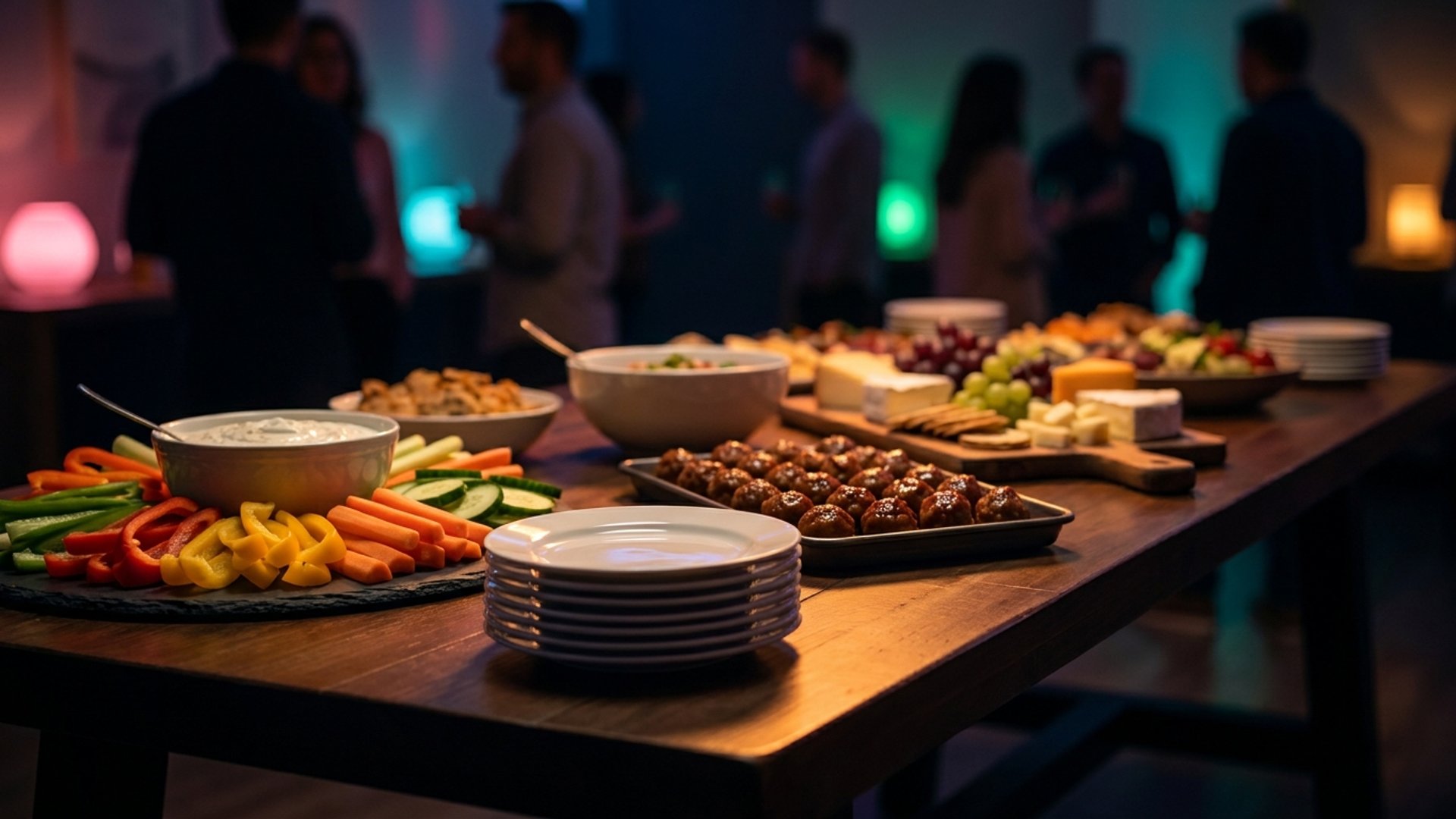
Knowing how to count calories at a buffet is a different skill from counting them at home. Nothing has a label. Nothing has a recipe. Half of it is someone's grandmother's casserole and the other half is in a slow cooker with no lid. There is no scale, and getting one out would be a strange thing to do at a wedding.
The research points somewhere other than willpower at the table. Two decisions made before you pick up a plate do most of the work, and the logging afterward is easier than it looks once you stop trying to be precise about the wrong things.
Why buffets break estimation specifically
Three separate forces hit at once, and none of them is about self-control.
Portion size drags intake up on its own. Rolls and colleagues served 51 adults the same macaroni and cheese in four sizes, from 500 g to 1000 g. People ate 30% more energy from the largest portion than the smallest. The part that matters here: it made no difference whether the experimenter plated the food or the subject served themselves from a dish. Serving yourself does not protect you.
Variety pushes it up further. Raynor and Epstein reviewed 39 studies on dietary variety and found that intake rises when a meal or diet contains more variety, with sensory-specific satiety as the proposed mechanism: you get bored of the thing you just ate, not of eating. A buffet is the maximum-variety condition. The next dish is always a new one.
And there is nothing to read. Homemade food carries no nutrition panel, and the recipe is not yours. Under-reporting is bad enough with packaged food. In the classic Lichtman study, 10 obese adults with a history of diet resistance under-reported their actual intake by an average of 47%, and overstated their physical activity by about half, though that second figure varied enormously from person to person. Ten people is a small and specifically selected group, so treat 47% as an illustration rather than your number. Reviews of reported energy intake find under-reporting is common across methods and populations, not a quirk of one sample.
None of that says a buffet ruins a week. It says a buffet is where your estimate is at its worst, so the useful move is to build in a margin rather than trust the guess.
The one swap that beats portion control
The finding that helps most here is about energy density, not size.
Rolls and colleagues varied both portion size and energy density across two full days of meals for 24 women. Cutting portion sizes by 25% reduced intake by 10%, about 231 calories a day. Cutting energy density by 25% reduced intake by 24%, about 575 calories a day. The two effects were additive, and hunger and fullness ratings did not differ across any of the conditions.
Energy density did more than twice the work of portion size, and nobody felt it.
There is a catch worth knowing, from a later study on vegetables: adding more vegetables to a meal did not reduce meal energy intake. Substituting them for the grain and meat did. Piling salad next to your existing plate is not the tactic. Swapping it in is.
At a potluck table, that means what goes on the plate matters more than how big the plate is. Fill the space with the lower-density options first, then take what you actually came for.
Estimating portions when there is no scaleWhere the calories actually are
The heavy hitters at a potluck are predictable, and they are almost never the main dish. They are the dips, the fried starters, the nuts, the cheese and the drinks, because those are the items where a small volume carries a lot of energy.
Here is what a normal-looking serving costs, using the same figures behind our food pages:
| Item | A realistic serving | Calories | Per 100 g |
|---|---|---|---|
| Mixed nuts | 1/4 cup (36 g) | 220 | 610 |
| Potato chips | 1 oz, about 15 chips (28 g) | 153 | 545 |
| Ranch dressing | 2 tbsp (28 g) | 120 | 430 |
| Cheddar cheese | 1 slice, 1 oz (28 g) | 113 | 403 |
| Brownie | 1 square, 2 3/4 in (56 g) | 227 | 405 |
| Hummus | 1/4 cup (60 g) | 140 | 233 |
| Meatballs | 3 (84 g) | 240 | 286 |
| Guacamole | 1/4 cup (60 g) | 93 | 155 |
| Salsa | 1/4 cup (65 g) | 19 | 29 |
| Baby carrots | 1 cup (128 g) | 53 | 41 |
Look at the right-hand column rather than the middle one. Mixed nuts and salsa are both "a scoop", and one of them is 21 times the other by weight. That gap is what the energy density research is describing, and it is why the composition of the plate matters more than how full it is.
Air-popped popcorn is the useful edge case, because per 100 g it is denser than nachos. What makes it a good bowl to stand next to is that it barely weighs anything: a cup of it is 8 g and 31 calories, while six or eight nacho chips with cheese come to 57 g and 200. Compare nachos against popcorn and most of the gap is how much air you are eating.
Before you get there
Do not bank calories. Skipping lunch to "save room" is the single most reliable way to arrive hungry and eat more than you would have across both meals. Eat normally. A protein-heavy meal a few hours before is the version that works.
Decide the plate composition, not a calorie target. A number you invented in the car has no chance against a table with 20 dishes on it. A rule does: half the plate vegetables or salad with a light dressing, a quarter protein, a quarter of whatever you actually came for.
Set the drink count in advance. Alcohol is the least tracked and least filling category present. Two glasses of wine is 250 calories that produce very little fullness, and they tend to loosen the plate rule at the same time.
Pick your two. There are usually two dishes at any potluck that are genuinely worth it: someone's signature thing and the dessert you like. Choose them deliberately and let the other 18 go. This is a direct counter to the variety effect, and it works better than trying to have a small amount of everything.
At the table
-
Walk the whole table before taking a plate. You cannot allocate a plate you have not seen. Ten seconds of looking stops the first four dishes from filling it before you reach the thing you wanted.
-
Use one plate, once. One plate is a countable unit, and four grazing passes are not. Everything about logging afterward gets easier if the meal has edges.
-
Anchor to your hand. A cupped palm is roughly a half cup. A closed fist is roughly a cup. A thumb from tip to first knuckle is roughly a tablespoon, which is the useful one for dips and dressings. Our portion visualizer is worth five minutes at home so the anchors are calibrated to your hands and not somebody else's.
-
Get the dip on the side. Poured dressing and spooned dip are unmeasurable once they hit the food. A small amount on the edge of the plate, dipped into, is both countable and usually less. Ranch at 430 calories per 100 g is where a salad quietly turns into the densest thing on the plate.
-
Put the drink down between sips. Holding a glass makes it disappear without being counted.
How to log it afterward
You are going to be wrong. Plan the error instead of pretending it away.
Log the plate as separate items, not one blob. "Potluck dinner, 1,200 calories" is a guess with nothing underneath it. Six items each with an estimate is a guess you can inspect and correct next time.
Estimate high, deliberately. Take your honest guess for each dish and add a third. Homemade food carries more oil, butter and cheese than the restaurant version of the same dish, and the direction of estimation error is almost always downward.
Do it the same night, not tomorrow. Memory of a 20-dish table is gone by morning, and what survives is the flattering version.
Photograph the plate before you eat it. It takes thirty seconds and does more than anything else on this list. A photo turns an evening of recall into a look at an actual plate, and if you use an app that estimates from images, it is the input it needs.
Take the week's average, not the day. A 1,500 calorie evening inside a 7-day average is a bump. Inside a single day it looks like a catastrophe, and treating it as one is what turns a big meal into a bad week.
Estimating without a scale, in generalA plate, priced out
Here is a plate nobody would describe as excessive. One trip, modest servings, two drinks.
| Item | Serving | Calories |
|---|---|---|
| Meatballs | 3 (84 g) | 240 |
| Hummus | 1/4 cup (60 g) | 140 |
| Crackers | 5 (15 g) | 62 |
| Potato chips | 1 oz (28 g) | 153 |
| Cheddar | 1 slice (28 g) | 113 |
| Ranch, poured | 2 tbsp (28 g) | 120 |
| Mixed nuts | 1/4 cup (36 g) | 220 |
| Brownie | 1 square (56 g) | 227 |
| Red wine | 2 x 5 oz | 250 |
| Total | 1,525 |
Now apply the energy density swap rather than a smaller plate. Trade the chips and poured ranch for a cup of baby carrots, a cup of sliced cucumber, a medium bell pepper and a quarter cup of salsa (122 calories together). Skip the nuts. Drink one glass of wine instead of two. Keep the meatballs, the hummus, the cheese and the whole brownie.
That plate lands near 1,029 calories. Roughly 500 fewer, and the change is in what the plate is made of rather than how much of it there is.
The swap works because it targets density. Halving every portion on the first plate would have saved about the same, but only by eating half as much food. In the two-day Rolls study the density cut reduced intake more than twice as much as the portion cut, and neither changed how full people said they were.
Mistakes that cost the most
Grazing without a plate. A handful of nuts taken standing by the snack table is usually the most energy-dense food in the room, eaten in the least countable way.
Logging tomorrow. Twelve hours of forgetting removes the small items first, and the small items at a potluck are the dense ones.
Counting the salad and skipping the dressing. Four cups of shredded romaine is about 32 calories. A quarter cup of ranch poured over it is 241.
Treating the day as blown. One heavy evening does not require a compensating fast the next day. It requires logging and then a normal Sunday.
Assuming homemade means lighter. It usually means more butter, because nobody is optimizing a family recipe for macros.
The bottom line
You cannot weigh a potluck and you do not need to. Decide the composition before you are standing over the table, keep the meal to one countable plate, get the dense stuff onto the side of the plate rather than over it, and log it the same night with an honest upward margin.
The portion research is clear that self-serving does not protect you from a large portion, and that cutting energy density does roughly twice as much as cutting portion size. Both of those are decisions about what goes on the plate, made once, before the table and the room start making them for you.
Frequently Asked Questions
Log the Plate From a Photo
Calvin estimates a mixed plate from one picture, so the potluck gets logged before you forget it

References
- Rolls et al. 2002 - Portion size of food affects energy intake in normal-weight and overweight men and women (Am J Clin Nutr)
- Rolls et al. 2006 - Reductions in portion size and energy density of foods are additive and lead to sustained decreases in energy intake (Am J Clin Nutr)
- Rolls et al. 2010 - Portion size can be used strategically to increase vegetable consumption in adults (Am J Clin Nutr)
- Raynor & Epstein 2001 - Dietary variety, energy regulation, and obesity (Psychol Bull)
- Lichtman et al. 1992 - Discrepancy between self-reported and actual caloric intake and exercise in obese subjects (N Engl J Med)
- Livingstone & Black 2003 - Markers of the validity of reported energy intake (J Nutr)

Founder & Developer
Ryan is the founder and lead developer of Calvin. With a passion for both technology and health optimization, he built Calvin to solve his own frustrations with manual calorie tracking. He believes that AI can make healthy eating effortless.
Related Articles
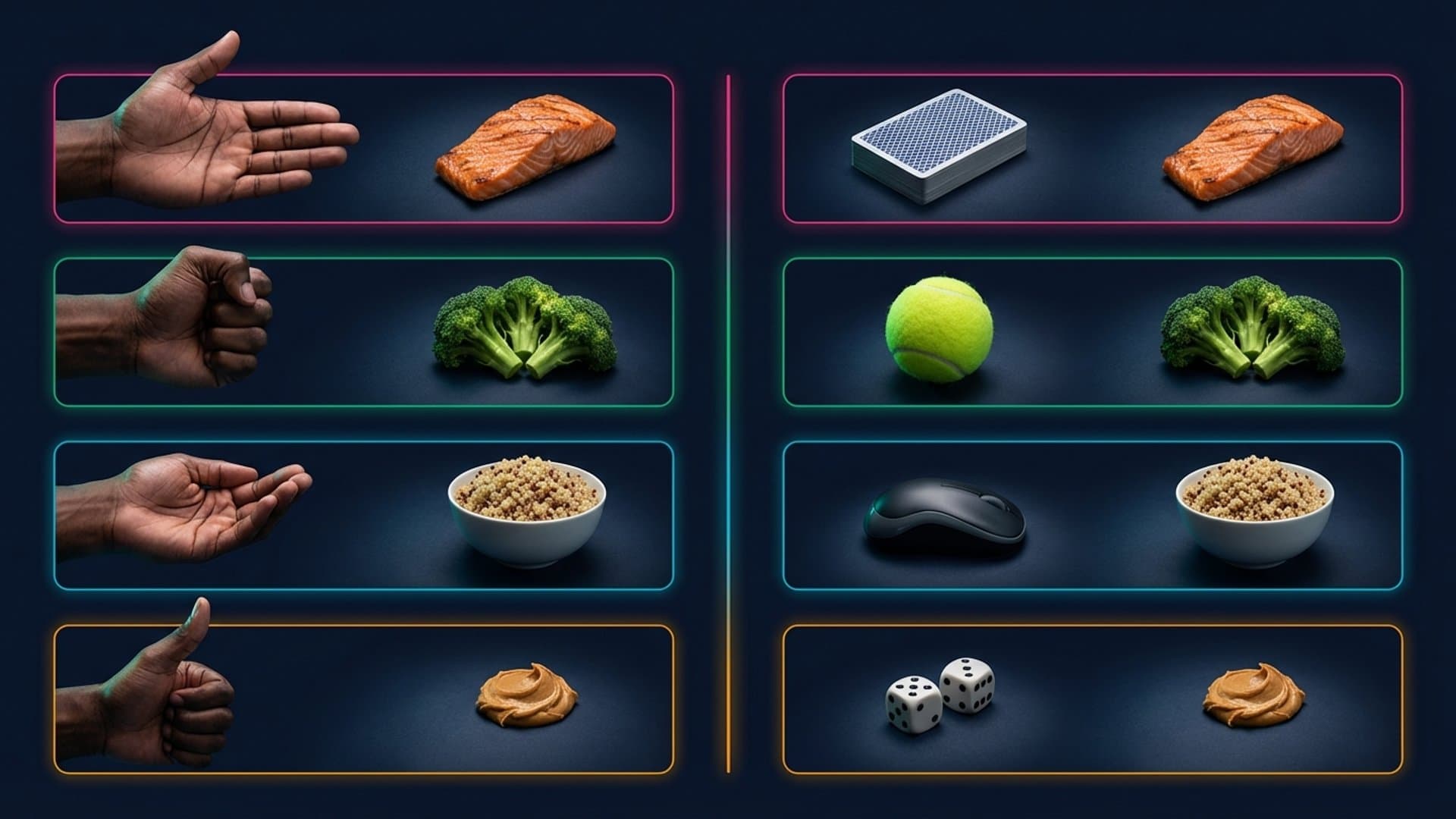
How to Estimate Portions When You Can't Measure
Master visual portion estimation for any situation. From restaurants to buffets to dinner parties, these techniques help you track calories accurately anywhere.
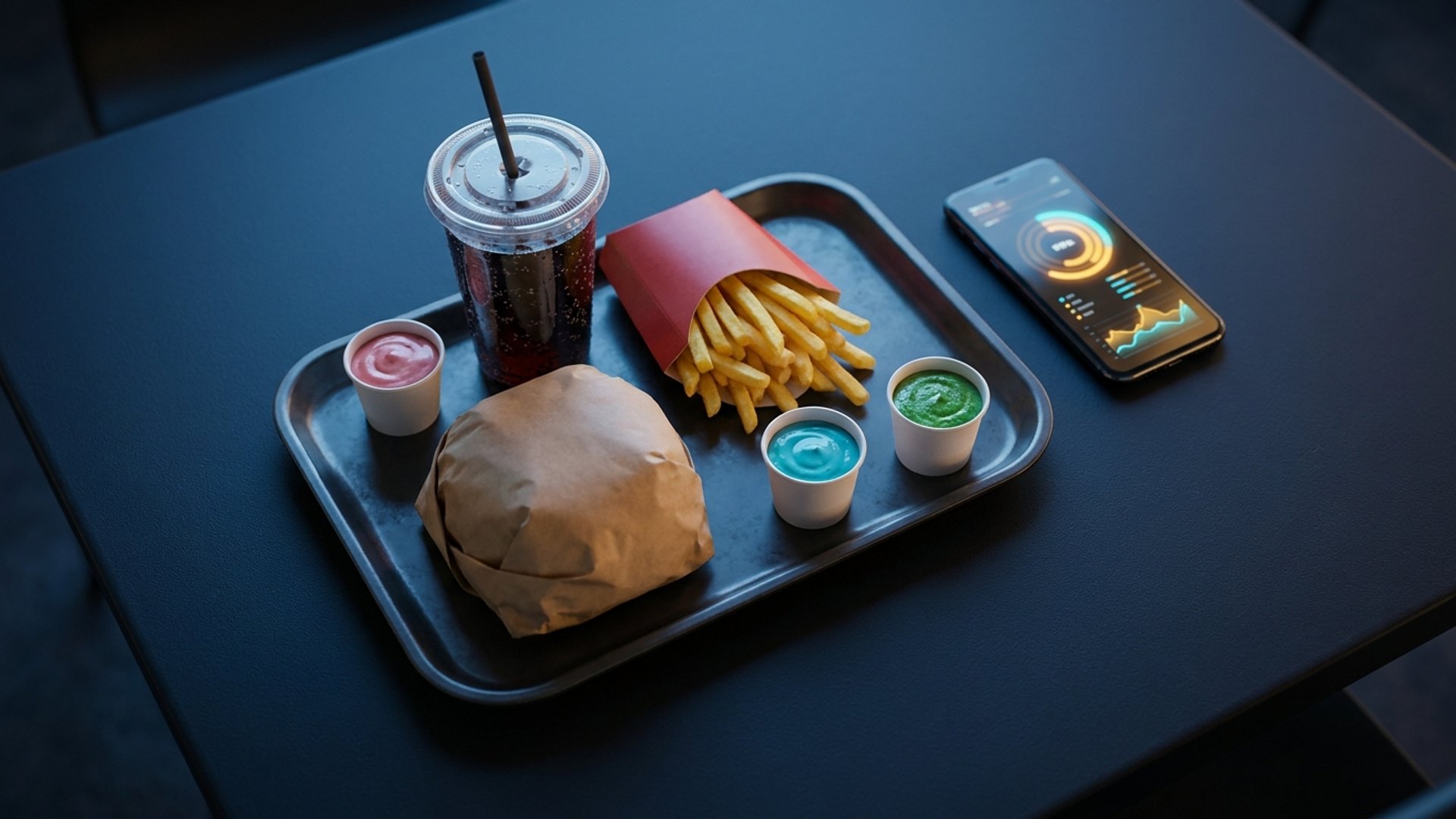
Tracking Fast Food Calories: How to Use the Published Numbers
Fast food is the easiest meal to track accurately, because the numbers are already published. Here's how to read them, where they go wrong, and what to log.
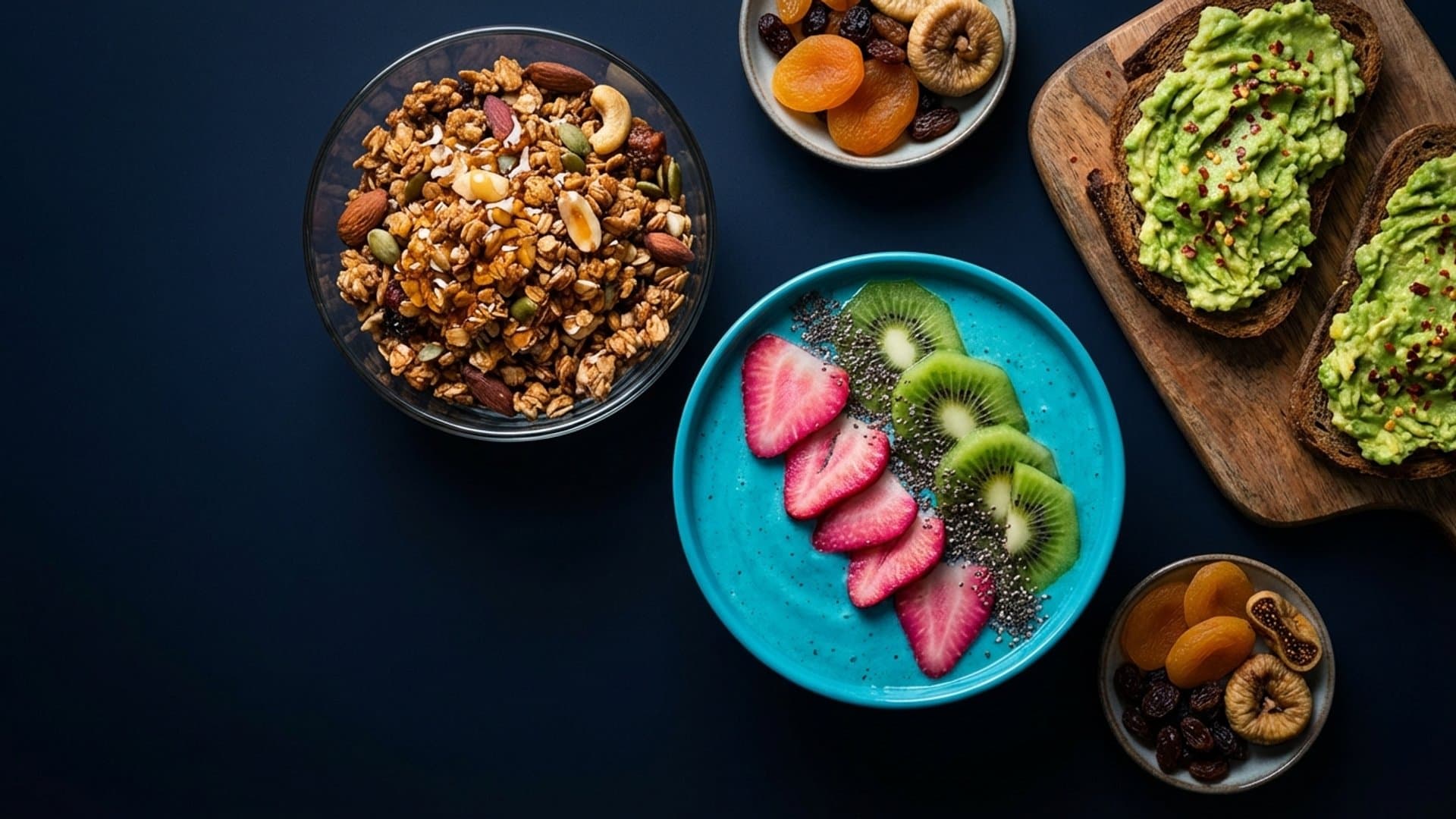
The Most Underestimated Foods: Where Calorie Counting Goes Wrong
Discover the foods that sabotage calorie counts the most. From cooking oils to 'healthy' options, learn where hidden calories hide and how to account for them.