

Tracking Fast Food Calories: How to Use the Published Numbers
Fast food is the easiest meal to track accurately, because the numbers are already published. Here's how to read them, where they go wrong, and what to log.

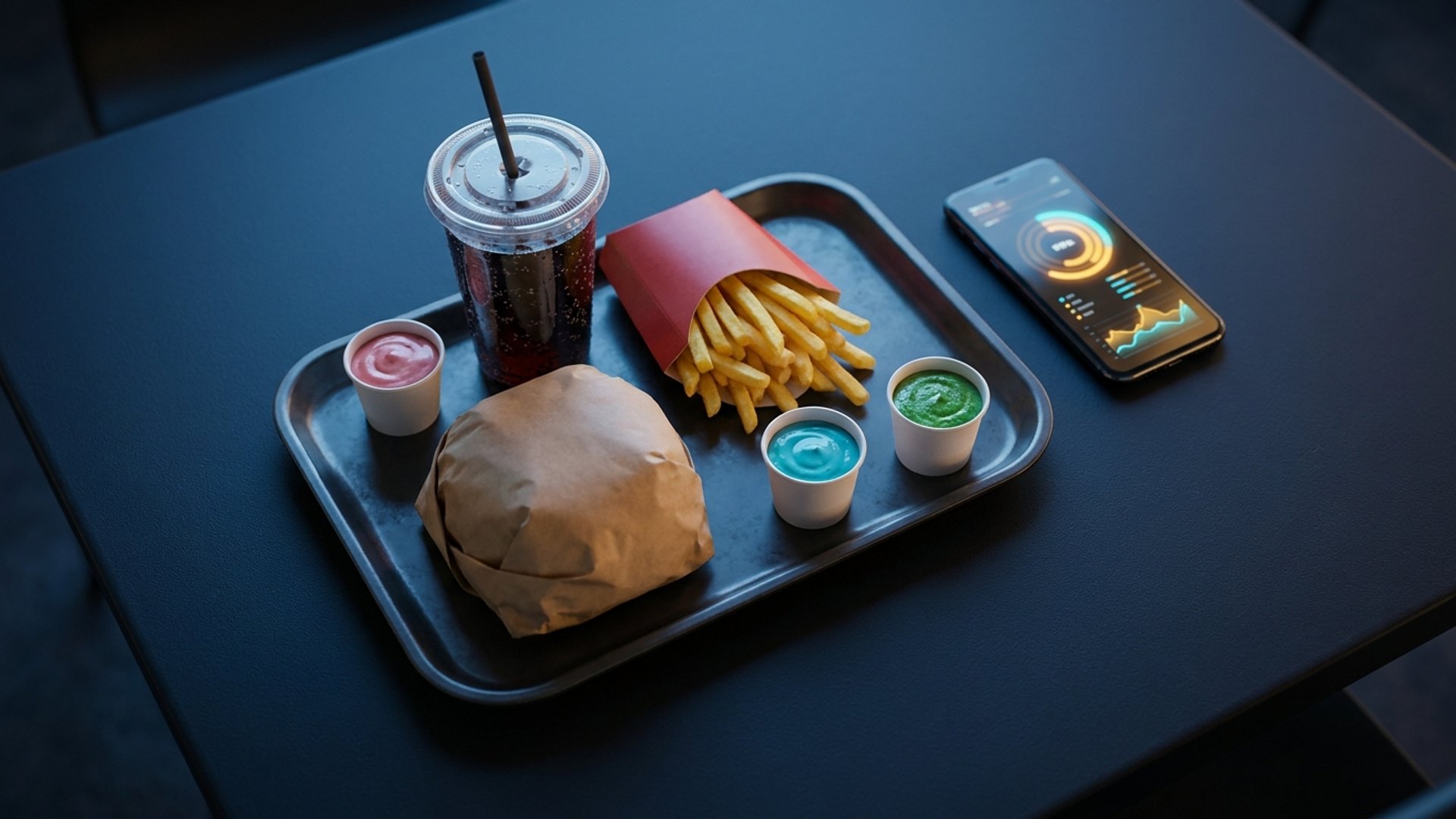
Tracking fast food calories is easier than tracking almost anything else you eat, and most people do it worst. The chain already weighed the patty, measured the oil, and published the number. Meanwhile the pasta you cooked at home, the one you logged with confidence, was a guess about how much olive oil ended up in the pan.
The problem isn't that fast food data is bad. It's that people either skip logging the meal entirely because it felt like a bad day, or they log the base item and quietly ignore everything that came with it.
Why the drive-thru is your most accurate meal
A fast food item is manufactured. The patty is portioned by weight before it ever ships to the store. The fryer basket holds a fixed amount, and the soda machine pours to a line. Variation exists, but it's small compared to a restaurant kitchen where a cook free-pours butter by feel.
Compare that to the two situations trackers usually feel better about:
| Meal source | Where the number comes from | Typical uncertainty |
|---|---|---|
| Fast food chain | Published lab analysis of a standardized recipe | Low |
| Sit-down restaurant | Estimated from a menu description | High |
| Home cooking | Your own measurements, minus what you forgot | Moderate |
If you're going to be sloppy anywhere, be sloppy at the sit-down restaurant. At the drive-thru you have real numbers, so use them.
In the United States, chain restaurants and similar retail food establishments with 20 or more locations are required to post calorie information for standard menu items. That's the reason the number is on the menu board at all, and it's why the same chain's website has a full nutrition table buried in the footer.
What the published number actually covers
The calorie count on the board applies to the item as the chain defines it. That definition is narrower than what lands in the bag.
Published numbers usually cover the standard build of the item, the stated portion size, and nothing else. They don't cover the sauce you asked for on the side, the extra slice of cheese, the upgrade from medium to large, or the second trip to the fountain machine.
This is where the gap opens. The number on the burger holds up fine, and the rest of the tray quietly stops matching it.
How accurate are they really
Researchers have gone and bought restaurant food, sent it to a lab, and compared the measured energy to what the restaurant claimed. Urban and colleagues published one of these in JAMA in 2011, measuring 269 items from 42 quick-serve and sit-down restaurants by bomb calorimetry. The headline is reassuring in aggregate and less reassuring per item: stated and measured values differed by only about 10 calories a portion on average, a gap too small to be statistically meaningful, but 19 percent of items measured at least 100 calories above what was stated. The understating clustered in the foods with the lowest stated calories.
So treat a published number as a good estimate with error bars, not a measurement of the specific sandwich in your hand. That's still far better than anything you'd guess.
The error bars are per item, not per day. If you eat fast food a few times a week, the overs and unders tend to wash out. The thing that does not wash out is systematically forgetting to log the sauce.
The four things people leave out
Sauces and dressings
A ketchup packet barely registers, but most of what else arrives in a paper cup does. Our data puts a single tablespoon of mayonnaise at 94 calories and two tablespoons of ranch dressing at 120, while a ketchup packet is only 9. Two dipping cups of ranch with your nuggets can cost more than the nuggets.
Chains publish sauce calories separately, which is exactly why they get skipped. The sandwich number on the board already includes its standard sauce. Anything you add on top is a second line item you have to look up.
Full guide to logging sauces and condimentsSize defaults
Fry sizes are not a rounding difference. Using our french fries data, a small order is about 206 calories, a medium about 339, and a large about 447. Logging "fries" without the size can miss 240 calories, which is most of a plain hamburger.
The same applies to drinks. Regular soda runs about 42 calories per 100 grams in our soda data, so a 32 ounce fountain cup filled to the top is roughly 400 calories before you account for ice. Ice is doing you a real favor here, and it's also why a fountain drink is genuinely hard to log precisely.
The build
"Cheeseburger" is not one food. Our hamburger data shows a plain fast food hamburger around 254 calories, a cheeseburger at 313, and a quarter pound burger with cheese at 530. Same word on the menu, double the calories.
If you customize, you have to adjust. Extra cheese, bacon, a second patty, and swapping a regular bun for a brioche one all move the number, and the board price won't tell you by how much.
Shared food
Fries and nachos get eaten out of the bag by whoever is in the car. A restaurant order of nachos is about 525 calories, and a large loaded platter is over 1,000. If three of you are picking at it, someone is logging a third of it and someone is logging nothing.
Estimate honestly rather than precisely. Half of a shared large fry is a better log than skipping it.
A ninety second workflow
This works best before you order. Deciding what to eat from the nutrition page is a different experience than deciding from the picture menu, and it costs you a minute.
- Pull up the chain's nutrition page on your phone while you're still in line or in the parking lot. Every major chain has one, and most have a build-your-own calculator that handles customizations.
- Log the base item first. Sandwich, burrito, bowl, whatever the main thing is. Get that in before you're eating.
- Add the sides and the drink as separate entries. Fries, drink, sauce. Three more taps, and they're the entries that actually decide whether the meal was 700 calories or 1,300.
- Adjust for what you changed. No cheese, extra sauce, small instead of medium. If the calculator handles it, use the calculator. If not, adjust by hand.
- Log it before it arrives. Pre-logging does more for fast food tracking than any other habit, because a meal you have already logged is one you can still change your mind about.
Reading a menu board like a tracker
Skip memorizing numbers and learn which words on the board cost money instead.
| Menu language | What it usually means | Rough cost |
|---|---|---|
| Crispy, breaded, hand-battered | Fried, with a coating that absorbs oil | +150 to 350 over grilled |
| Loaded, supreme, deluxe | Extra cheese, sauce, and often bacon | +150 to 300 |
| Double, quarter pound, half pound | A second patty or a heavier one | +200 to 300 |
| Creamy, ranch, aioli, special sauce | A fat-based sauce, often two servings of it | +100 to 200 |
| Grilled, roasted | Cooked without a batter or fryer | Baseline |
| Fresco, light, no mayo | A removed ingredient, usually the sauce | -50 to 150 |
Note what's missing from that list: "salad." A fast food salad with crispy chicken, cheese, candied nuts, and a full dressing packet frequently costs more than the burger. Salads are where the published number is most worth checking, because intuition is least reliable there.
The foods people underestimate mostWhen there's no published number
Small chains, regional places, and food trucks fall outside the labeling requirement. Anything under 20 locations may have nothing published at all.
Match to a similar item from a chain that does publish. A local taqueria's carne asada burrito is not going to be wildly different from a chain's steak burrito of the same size. Look up the chain version, then adjust for anything obviously bigger or smaller.
That substitution has evidence behind it. When researchers measured frequently ordered meals from non-chain restaurants, the meals averaged about 1,205 calories and were not significantly different from equivalent meals at large chains. The independent place is not quietly serving you less.
For the shape of the food itself, our category pages give you a baseline. A slice of pizza runs about 285 calories for cheese and 313 for pepperoni, and a personal pie is around 560. A slice from an independent shop is not going to break those ranges by much.
How to estimate portions without a scaleRound up when you're unsure. A tracker who consistently rounds up on unlabeled food will end up closer to the truth than one who splits the difference, because the failure mode in restaurant food is almost always more than you thought.
Build a short list instead of researching every time
The fix for fast food tracking is to stop estimating at all.
Pick five or six orders you actually like, look them up once, and reuse them. Most people eat from the same three or four chains, and within each chain they order roughly the same thing. Once you know your usual order at each place, the whole problem collapses into a saved entry.
A useful list has one order under 500 calories, one around 700, and one you're willing to spend 1,000 on when you want it. That last one matters. A list with no indulgent option is a list you'll abandon the first time you actually want a burger.
You can check whether those numbers fit your day with our TDEE calculator, which gives you the maintenance figure to budget against.
Does having the number on the menu change anything
Less than you'd think, and the research is thinner than the argument around it. A systematic review of 53 calorie labeling studies concluded that the effect is genuinely unclear, because too few of the underlying studies were well powered or strongly designed to settle it. Evidence that labeling changes what people buy at fast food specifically was limited, though there was some evidence it lowered calories purchased in cafeterias and in certain other restaurant settings. Nobody should expect a number on a board to reshape their eating.
But that research is about the general public glancing at a menu. It says very little about someone who is deliberately tracking. If you're logging, the label is data rather than a nudge, and the value comes from the arithmetic you do with it afterward.
Tracking at sit-down restaurants, where there are no numbersThe bottom line
Fast food gets treated as the enemy of calorie tracking when it's closer to the opposite. The portions are standardized and the numbers are published. A drive-thru meal you looked up is more accurately logged than the dinner you cooked and eyeballed.
What sinks people is everything around the main item. The sandwich gets logged and the large fry, the fountain drink, and two cups of ranch don't. Log the whole tray, use the size you actually ordered, and build a short list so you stop starting from scratch.
Tracking accurately without weighing everythingFrequently Asked Questions
Log the Whole Tray, Not Just the Burger
Calvin makes it fast enough that you'll actually log the fries too

References
- FDA - Menu Labeling Requirements
- Urban et al. 2011 - Accuracy of stated energy contents of restaurant foods (JAMA)
- Urban et al. 2016 - Energy contents of frequently ordered restaurant meals and comparison with human energy requirements and USDA database information (J Acad Nutr Diet)
- Bleich et al. 2017 - A systematic review of calorie labeling and modified calorie labeling interventions: impact on consumer and restaurant behavior (Obesity)

Founder & Developer
Ryan is the founder and lead developer of Calvin. With a passion for both technology and health optimization, he built Calvin to solve his own frustrations with manual calorie tracking. He believes that AI can make healthy eating effortless.
Related Articles
How to Track Calories at Restaurants Without Being Weird
Learn practical strategies for estimating and tracking calories when dining out. No food scale required, just smart approaches that don't make you the awkward person at the table.
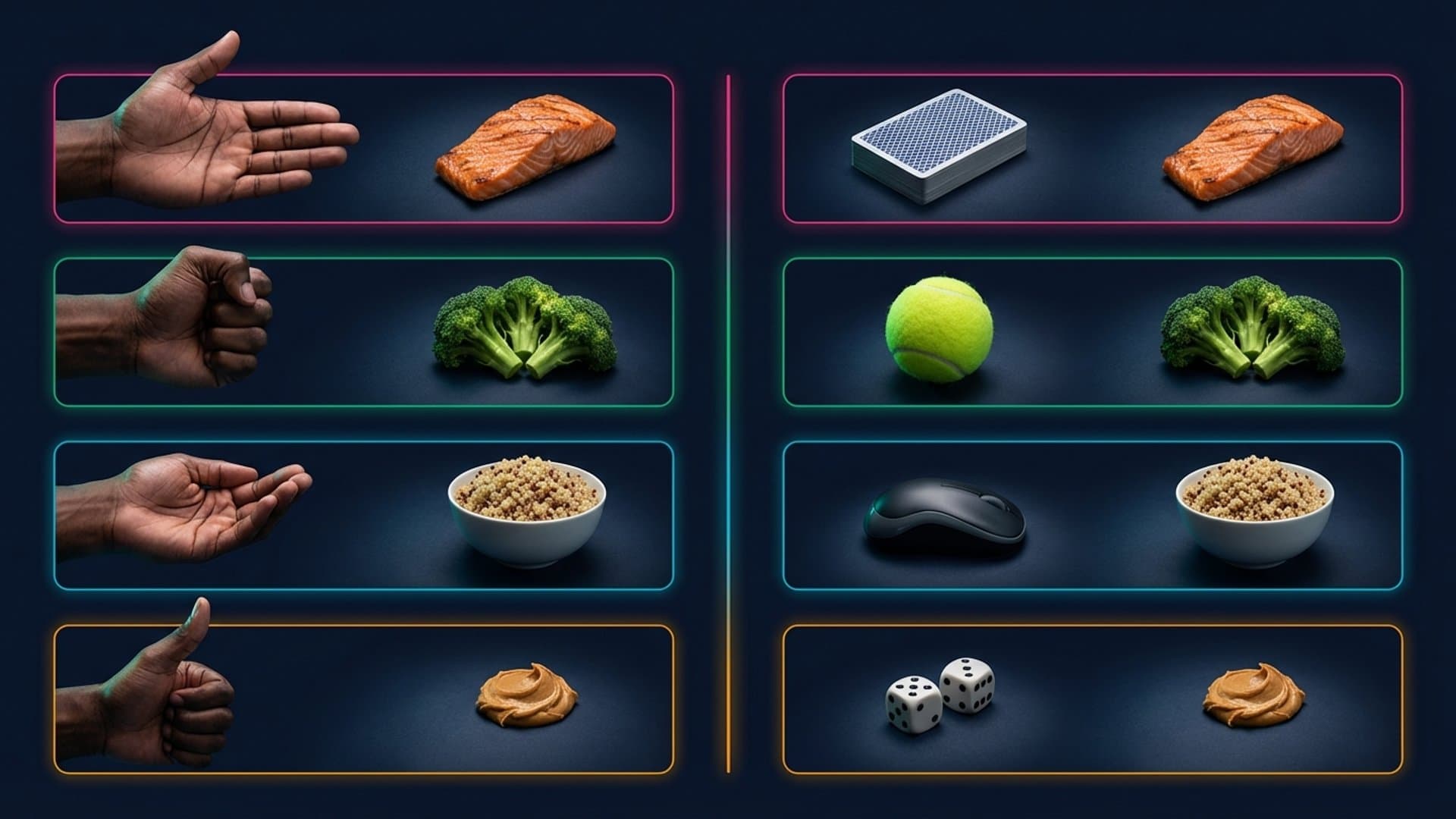
How to Estimate Portions When You Can't Measure
Master visual portion estimation for any situation. From restaurants to buffets to dinner parties, these techniques help you track calories accurately anywhere.

How to Track Alcohol Calories (Without Ruining Your Social Life)
Practical guide to tracking alcohol calories while maintaining a social life. Learn drink calorie counts, planning strategies, and how to make room in your budget.